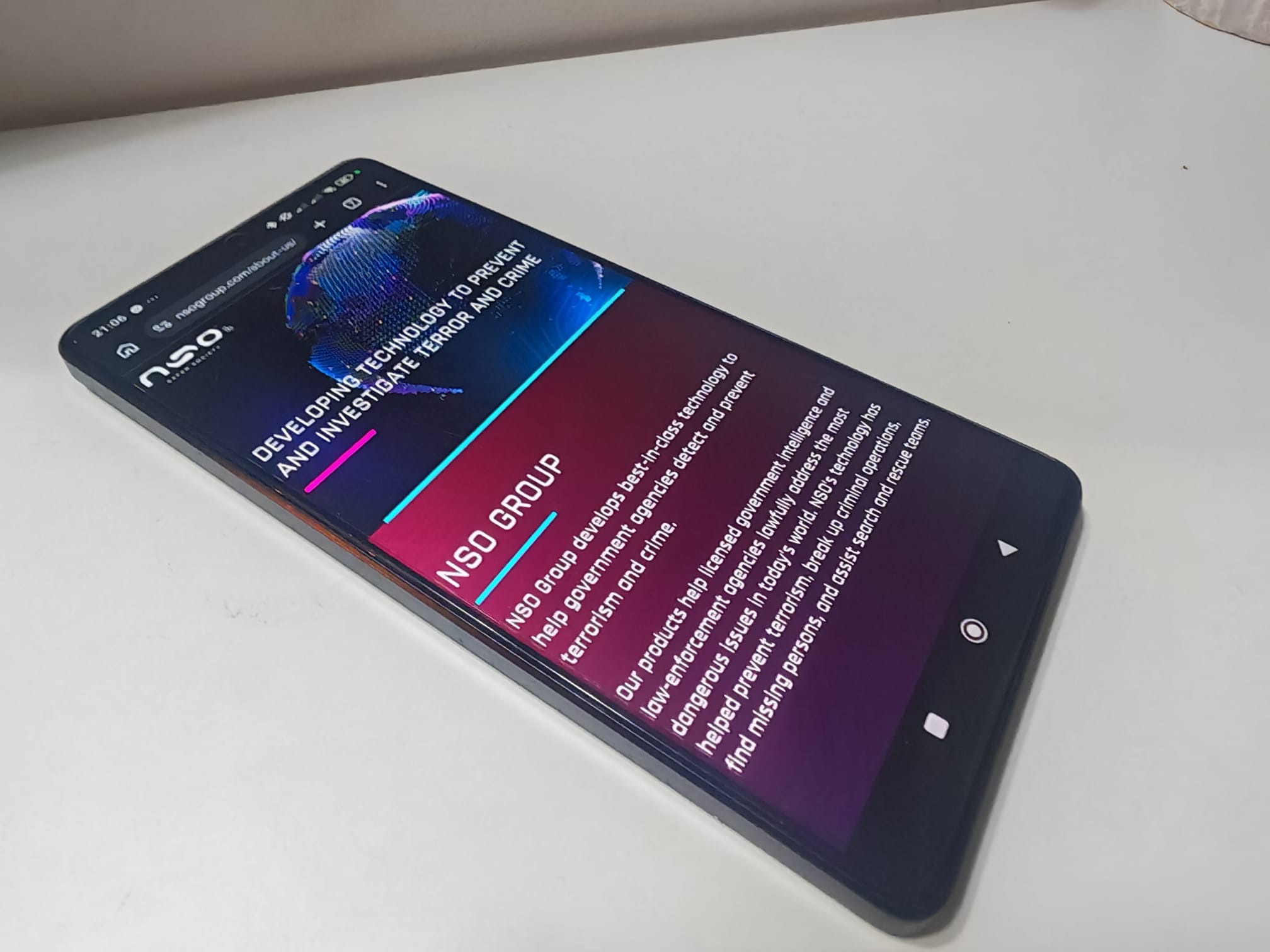
Beyond State Control: Investigation Confirms Pegasus Spyware Data Leaked Outside Poland
A Polish investigation has found that state agencies used Pegasus spyware without maintaining full control over its infrastructure, allowing sensitive surveillance data to pass through servers managed by Israel’s NSO Group. The findings have triggered a major political and legal scandal, with criminal charges filed against seven former senior intelligence officials over alleged misconduct and unlawful surveillance.
By Pawel Cybulski
955 views
In what is shaping up to be one of the most severe intelligence and data sovereignty scandals in post-communist European history, an investigation by Poland’s National Prosecutor’s Office—backed by expert forensic evaluations from the Internal Security Agency (ABW)—has confirmed that Polish state agencies operated the controversial Pegasus spyware without maintaining full operational or technical control over the system. Crucially, findings reveal that sensitive surveillance data and operational materials regularly departed Polish territory, passing through an anonymizing infrastructure managed entirely by the software's manufacturer, Israel’s NSO Group.
The revelations have escalated a fierce political and legal reckoning in Warsaw, culminating in formal criminal charges against top former intelligence directors and a public declaration by Prime Minister Donald Tusk, who characterized the arrangement as a "crime of state" (zbrodnia stanu).
Total Surveillance and Loss of Data Sovereignty According to official expert opinions released by prosecutors, the Pegasus system provided Polish authorities—primarily the Central Anti-Corruption Bureau (CBA)—with unprecedented, real-time access to targeted mobile devices running iOS and Android operating systems. Once installed, often without any user interaction or consent, the spyware harvested vast arrays of sensitive information.
The extracted data encompassed:
● Encrypted and unencrypted SMS, MMS, e-mail, and instant messaging conversations (including historical messages stored prior to the surveillance order).
● Real-time audio recordings via built-in microphones, ambient video capture via cameras, screen captures, and live VoIP/cellular call interceptions.
● Complete contact books, calendar entries, web browsing histories, stored photos, videos, and real-time GPS location tracking.
However, forensic analysis established that the CBA lacked full administrative control over the underlying platform. Polish operators did not possess administrative passwords for several core system accounts. Most critically, the primary server module responsible for infecting target devices remained under the exclusive control of NSO Group.
When NSO Group performed technical support, system updates, or configuration changes via remote connections, active surveillance operations were not suspended. This granted foreign technicians direct, unverified access to the system environment. While experts noted that technical access existed, the published findings do not confirm whether NSO personnel actively viewed or extracted specific intelligence files.
Foreign Infrastructure and Geographical Restrictions
A key finding of the ABW forensic report is that intercepted data was encrypted on targeted devices and transmitted out of Poland via a global anonymization network (often referred to as the Anonymization Transmission Network, or ATN). Managed solely by NSO Group, this network operated entirely outside the jurisdiction and technical oversight of Polish law enforcement.
Further scrutiny of the acquisition contracts—originally funded via a 25 million PLN allocation from the Ministry of Justice’s Fund for Victims of Crime (out of a total transaction exceeding 60 million PLN)—revealed stringent contractual limitations imposed by the developer. Under the terms of the agreement, Polish agencies were explicitly prohibited from utilizing the software against phone numbers registered in Russia, Belarus, or North Korea.
Instead, the system was extensively deployed domestically against political opposition figures, independent prosecutors, and civic leaders, as well as targets holding European phone numbers in allied nations, including France and Germany.
"A Crime of State": Political Fallout and Criminal Charges
Addressing the conclusion of the ABW’s investigative phase, Prime Minister Donald Tusk delivered a scathing assessment of the previous administration's handling of national security and intelligence sharing.
"They signed an agreement and paid over 30 million PLN for a surveillance system over which they had de facto no control," Tusk stated in an official commentary. "Control remained in the hands of Israel and an Israeli company. They paid money intended for crime victims for a system that transferred all possible data regarding Polish citizens, opposition leaders, and independent prosecutors to foreign infrastructure."
Tusk emphasized the gravity of handing over sensitive domestic intelligence pipelines to a foreign private entity closely tied to foreign security services: "People responsible for justice and state security handed over tens of thousands of sensitive data points of Polish citizens to a foreign state without any control. This is no longer just a scandal. It is a crime of state, and they will answer for it."
To date, the National Prosecutor’s Office has pressed formal charges against seven high-ranking former officials:
● Ernest B. (former Head of CBA), Piotr P. (former Head of ABW), and Maciej M. (former Head of SKW): Charged with official misconduct and failure to fulfill duties for authorizing the operational deployment of Pegasus without required teleinformatic security accreditation and necessary classified information protections.
● Daniel K. (former Deputy Head of CBA): Charged with unlawful disclosure of operational surveillance materials, including attorney-client privileged communications.
● Jarosław W., Katarzyna S., and Angela P. (former directors and operational experts at the CBA Warsaw Delegation): Charged with orchestrating groundless operational surveillance, unauthorized data collection, and misleading prosecutors and judges to secure wiretap authorizations.
Legal Supervision and the Way Forward
While Poland’s legal proceedings focus on internal accountability, significant structural questions remain regarding state surveillance capability and international oversight. There is currently no public confirmation that Polish authorities possess an equivalent alternative cyber-surveillance tool, though security analysts note that state agencies continue to maintain standard operational capabilities under judicial oversight.
Furthermore, no formal charges or legal actions have been publicly announced against NSO Group itself within Poland, leaving the company's legal status in the Polish proceedings a key point for ongoing verification. As the criminal trial against former intelligence chiefs moves toward court rooms, Poland’s Pegasus scandal stands as a cautionary precedent regarding the dangers of outsourcing state surveillance infrastructure to foreign commercial vendors.