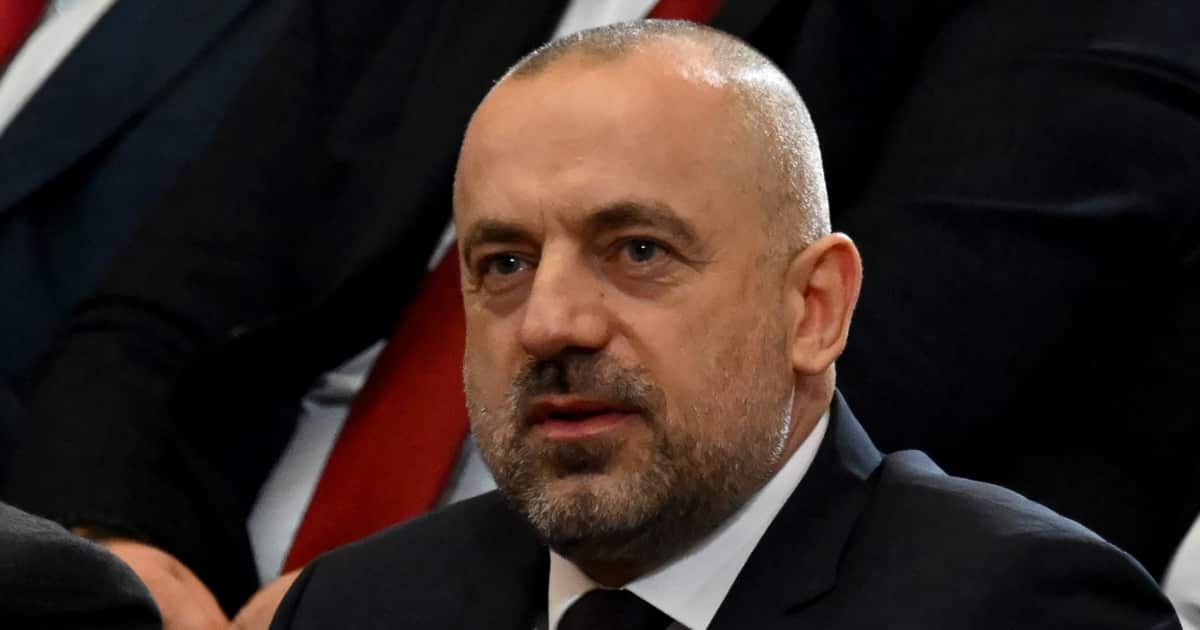
Belgrade Court Declines to Confirm Whether Suspected Banjska Attack Leader Milan Radoičić Missed Mandatory Police Check‑in
Milan Radoičić, accused of leading a 2023 armed attack in Banjska and listed on Interpol's wanted notices, reportedly did not appear at the Savski Venac police station on November 15 as required under court-ordered measures. The Higher Court in Belgrade said it monitors compliance and cooperates with competent authorities but refused to release police information; Radoičić remains under investigation in Serbia and is subject to U.S. and U.K. sanctions amid unconfirmed reports he has left the country.
By Clémence Desjardins
919 views
Milan Radoičić — who has publicly acknowledged leading an armed attack in the village of Banjska in northern Kosovo in 2023 — reportedly failed to appear at the Savski Venac police station in Belgrade on November 15 as required by court-ordered reporting measures. The disclosure that he did not comply with the scheduled check-in was published on November 17 by the Balkan Investigative Reporting Network (BIRN) and has not been independently confirmed by Serbian authorities.
The Higher Court in Belgrade told Radio Free Europe/Radio Liberty (RFE/RL) that it will not disclose any police-held information to the public. In a statement relayed to RSE, the court said it continues to monitor compliance with the measure requiring Radoičić to report to police and that it cooperates with competent authorities to take all prescribed actions related to verifying adherence to that obligation. The court reiterated the position it provided the previous day but did not confirm whether police logs show Radoičić did or did not attend on November 15.
Radoičić has been subject to reporting measures since October 2023 that oblige him to present himself at a police station on the first and fifteenth of each month; his passport was also confiscated. Until the recent reports, the Higher Court had previously said he had been complying with those conditions. Radoičić is under investigation in Serbia by the Higher Public Prosecutor's Office in Belgrade in connection with the Banjska attack.
The Kosovo prosecutor has charged 45 people over the Banjska incident, and three have been convicted; the rest, including Radoičić, are at large. Radoičić is also the subject of an Interpol wanted notice. In addition to the local criminal proceedings, he is under international pressure: both the United States and the United Kingdom have imposed sanctions on him over allegations of organized crime and corruption.
Attempts by RSE to contact Radoičić's lawyer, Goran Petronijević, went unanswered. In the absence of a response from Radoičić or his legal representative, and with the court declining to release police information, there is no official confirmation of his whereabouts following media reports earlier in November suggesting he may have left Serbia.
Unverified reports that circulated on November 13 said Radoičić had fled to Russia; the claim has not been substantiated by authorities. The last confirmed public sighting of Radoičić was at a campaign rally of the Serbian Progressive Party (SNS) in Kragujevac ahead of Serbia's elections. The reports of potential flight come amid concerns over the movement of other individuals linked to Radoičić.
One such figure is Zvonko Veselinović, a businessman from northern Kosovo and until recently an associate of Radoičić, who is also subject to U.S. sanctions. Security sources in Bosnia and Herzegovina confirmed to RSE that Veselinović flew from Sarajevo to Turkey on November 11 using a Serbian passport; he travelled with his brother, Žarko Veselinović. Those movements have raised further questions about how suspects under international sanctions are able to travel and evade accountability.
Radoičić has strong political associations: at the time of the Banjska incident he was the deputy head of Srpska lista, the main party representing Kosovo Serbs, which has operated with the backing of the ruling Serbian Progressive Party and has been linked in public discourse to former Serbian President Aleksandar Vučić. The case, and recent reporting about potential noncompliance with court monitoring measures, has implications for Serbia’s handling of high-profile suspects with political ties and for the enforcement of judicial decisions in cases with cross-border dimensions.
The Higher Court’s refusal to disclose police records underlines a tension between judicial confidentiality and public interest in high-profile criminal cases, particularly where suspects are under international arrest warrants and sanctions. As investigations continue in Kosovo and Serbia and international bodies maintain their own measures, questions remain about whether national authorities will be able to ensure suspects face justice rather than elude it by travelling abroad. RSE has invited members of the public to submit evidence or information that could assist reporting and investigations into these developments.