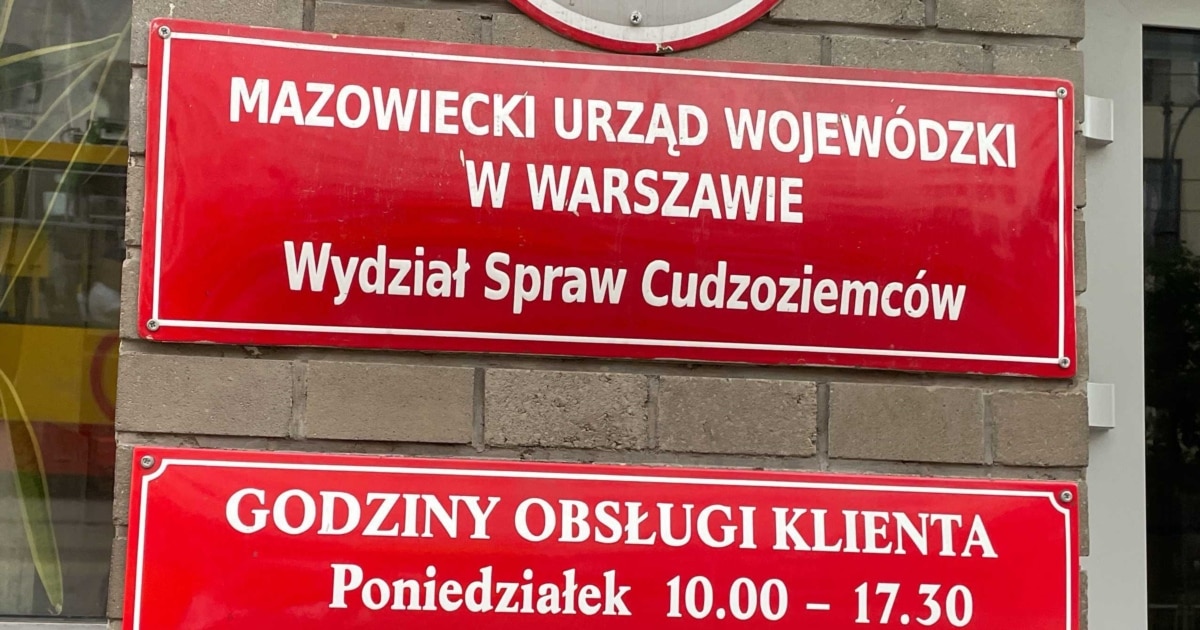
Belarusians in Poland face growing denials of international protection as authorities cite ‘improved’ conditions at home
Polish migration authorities have been increasingly rejecting applications for refugee status and subsidiary protection from Belarusians, arguing that the risk of political persecution has declined since the 2020 protests and subsequent events. Belarusian lawyers and activists dispute that assessment, urging systematic appeals, better-documented cases and greater public attention to prevent a change in Polish practice that could leave vulnerable people without protection.
By Vanessa Bergmann
1,026 views
Polish authorities are increasingly issuing negative decisions on requests for international protection from citizens of Belarus, drawing on a line of reasoning that the situation in Belarus has improved and that the level of repression has declined. International protection in Poland is granted in two forms: refugee status (the so-called Geneva “blue passport”) and subsidiary protection, which provides a renewable two‑year residence permit. The trend and its legal and practical consequences have raised alarm among Belarusian lawyers and activists working with asylum applicants in Poland.
Official statistics from Poland’s Urząd do Spraw Cudzoziemców (Office for Foreigners) show that between 2021 and 2025 nearly 12,000 positive decisions were issued to Belarusians — about 900 people received refugee status and more than 10,000 were granted subsidiary protection. For the first five months of 2026 the office reported 710 decisions in Belarusian cases: 215 were granted refugee status (30.3%), 368 were granted subsidiary protection (51.8%), 96 cases were discontinued (13.5%), and 31 decisions were negative (4.4%).
Despite the relatively small proportion of outright refusals in that five‑month snapshot, Belarusian legal practitioners say they see a worrying pattern in the reasoning offered by Polish officials. Rejection letters increasingly invoke a set of facts — now presented as reducing the risk to applicants — including the passage of nearly six years since the 2020 protests; presidential elections in January 2025; a claimed gradual reduction in the scale of repression; the expiry in 2026 of limitations for prosecution under Article 342 of the Belarusian Criminal Code (relating to “mass disorder”); and a series of presidential pardons signed by Aleksandr Lukashenko since June 2024.
Polish authorities often conclude that many applicants were not leaders or organizers of protests but ordinary participants, and therefore are no longer of special interest to Belarusian security services. In those cases the Office for Foreigners has sometimes assessed that “the likelihood of arrest and conviction on political grounds upon return to Belarus is not realistic.” That assessment, however, is vigorously disputed by Belarusian opposition figures and lawyers.
Mikhail Kirilyuk, a member of the Coordination Council and a lawyer for the People’s Anti‑Crisis Administration (Народнае антыкрызіснае ўпраўленьне, NAU), told Polish officials — including a recent meeting with Tomasz Cytrynowicz, head of the Office for Foreigners — that Belarusian justice is arbitrary and that state security services may fabricate charges, regardless of whether a person was a protest leader. Kirilyuk warned that prosecutors or security services could falsely claim an applicant was a group leader or organizer and pursue them. He described a reluctance among some denied applicants to appeal because of trauma and fear: "Калі ласка, давайце падамо апэляцыі" was the encouragement he reported offering to people who refused legal challenges.
Kirilyuk and NAU say appeals are crucial: successful court challenges to negative decisions can force the Office for Foreigners to reverse or change its practice. NAU has offered to finance Polish lawyers for appeals where applicants cannot afford representation. Kirilyuk warned that when individuals do not contest refusals, that passive acceptance can indirectly support what he described as an unhelpful administrative practice and may shape future migration policy toward Belarusians. He argued that Belarusians have a strong reputation as law‑abiding residents and should insist on protections they are entitled to under law.
Legal specialists who assist applicants emphasize concrete procedural steps and common mistakes. Volha Timkina, a specialist in legalization, urged applicants to file appeals and to prepare stronger documentary and testimonial evidence. She identified recurring errors: official decisions sometimes lack an up‑to‑date analysis of the situation in the applicant’s country of origin or show incorrect application of the law; applicants themselves sometimes provide self‑undermining statements — for example, describing a Telegram channel they ran as "neutral content," which authorities interpret as evidence that they posed no risk and therefore have no reason to fear persecution.
Timkina recommended that applicants provide detailed, specific information: when and where events occurred; whether arrests took place; whether police reports, administrative or criminal cases were opened; whether searches or threats happened; and why Belarusian authorities would know about that individual. She advised applicants to carefully prepare a chronology, be honest during interviews if they do not remember exact dates, and not rush. She also stressed the importance of reading and checking interview protocols before signing, and of using a competent translator if Polish is not well understood, because small inconsistencies or mistranslations can become grounds for negative credibility findings.
The debate over Polish practice has wider implications for refugees and human rights. If Polish administrative bodies increasingly treat the political risk to ordinary participants in Belarusian protests as low, fewer people may obtain protection despite fears rooted in arbitrary prosecution and security‑service interest. Lawyers and activists say that sustained legal challenges, clear presentation of evidence by applicants and broader media attention are necessary to prevent a narrowing of protection. For now, NAU and other groups are urging denied applicants to appeal, offering to help secure legal representation and to build case law that could shape future decisions and reaffirm the right to international protection for those at risk of political persecution.