Belarus forces liquidation of more NGOs as civic sector suffers heavy institutional losses since 2020
Lawtrend monitoring shows Minsk and Gomel courts and a district executive committee have ordered the compulsory liquidation of at least three funds and one non-state institution, while experts say dozens more organisations have chosen self-liquidation under pressure. Since the 2020 post-election crisis, more than 2,090 non-profit organisations have been lost, driven by punitive legislation, criminal prosecutions and an inhospitable legal environment.
By Alexander Walter
980 views
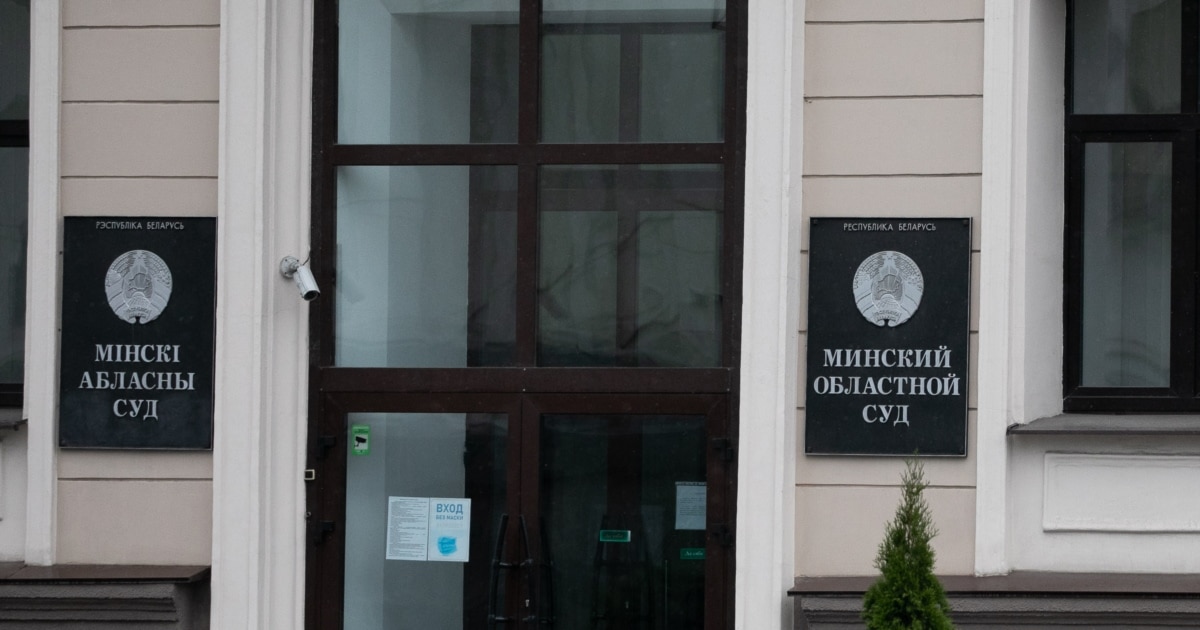
Belarusian authorities have forcibly liquidated at least three additional non-profit funds and one non-state institution, according to monthly monitoring published by the human rights and research initiative Lawtrend. The decisions to dissolve these organisations were issued by the Minsk and Gomel regional courts and by the Mior district executive committee, Lawtrend said, marking another wave of institutional losses for the country’s embattled civil society.
Two of the three funds targeted by court rulings had submitted the financial and operational reports required under Belarusian law for 2023 and 2024, the monitoring found. The non-state institution that was ordered dissolved had previously initiated a self-liquidation process but later rescinded that decision — a sequence that highlights the complexity and coercive pressures surrounding the closure of civic organisations under current conditions.
In October alone, Lawtrend noted that at least six non-governmental organisations formally decided to liquidate themselves. Specialists who follow the sector say these voluntary closures are largely de facto forced: leaders and staff choose self-liquidation to avoid criminal exposure, administrative penalties and the widening risks to members and partners. One of the organisations that announced independent closure in October was the educational centre Razum Life, which was registered on 22 February 2022.
Despite the wave of closures, state registration of new organisations has continued at a limited pace. Analysis of data from the Unified State Register of Legal Entities and Individual Entrepreneurs shows that between 1 January and the end of October 2026, Belarus registered 25 non-profit organisations. Of these, 13 were classified as non-state institutions — including four focused on animal protection, three social or charitable entities, two in cultural and creative fields, two educational institutions, two sports organisations and one aimed at developing interregional initiatives. In addition, roughly a dozen public associations were registered, largely sports clubs, youth organisations, and small professional or cultural associations.
However, Lawtrend’s analysis found no newly registered funds among that cohort for 2026, and experts caution that any registrations take place against a backdrop of persistent legal and political threats. Since the 2020 post-election crisis, the civil society sector’s cumulative institutional losses have reached at least 2,090 non-profit organisations, according to the monitoring. Since 2021 alone, at least 1,272 organisations have been forcibly liquidated or are undergoing forced liquidation, and a further 818 organisations have opted for self-liquidation.
Observers attribute the shrinking space for civic engagement to an expanding set of legal instruments and enforcement practices that effectively criminalise ordinary civil society activity. Lawtrend and legal specialists point to the continued use of broad “anti-extremism” legislation as a primary tool of pressure: authorities have pursued criminal cases over donations to civic initiatives, penalised participation or collaboration with organisations, and designated informational resources and representatives of organisations as “extremist materials.” Such measures not only expose activists to prosecution but also create legal and reputational risks that compel many organisations to cease operations.
The repression extends beyond organisational closures. Lawtrend’s monitoring notes that former political prisoners are also being targeted with prosecutions for alleged “evasion of preventive supervision,” including cases involving people who have been evacuated or relocated abroad. Meanwhile, restrictions on internet freedom and broader censorship measures continue to isolate civic actors and limit avenues for outreach, fundraising and information-sharing.
Taken together, the forced and coerced liquidation of organisations, criminalisation of assistance and participation, and persistent surveillance and repression paint a bleak picture for Belarusian civil society. International rights monitors, legal analysts and local activists warn that unless these trends are tackled — through reforms of repressive legislation and accountability for abuses — the ability of independent organisations to operate within Belarus will remain severely constrained, with lasting consequences for political pluralism, civic freedoms and human rights protections.