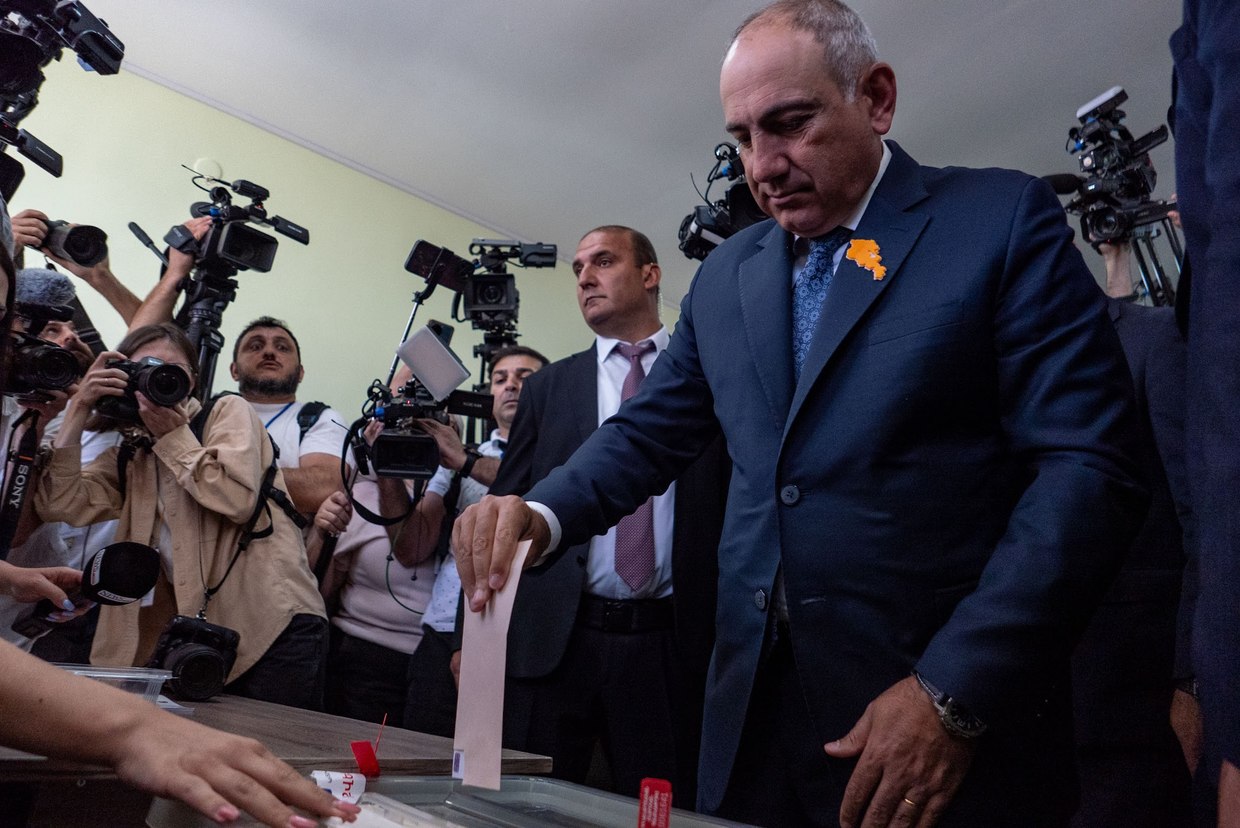
Azerbaijan’s Pro-Government Media Cast Pashinyan’s Win as a Victory for Ilham Aliyev and Baku’s Peace Plan
In the wake of Armenia’s parliamentary victory for Nikol Pashinyan’s Civil Contract party, Azerbaijani state-aligned media and officials portrayed the result as an endorsement of President Ilham Aliyev’s peace agenda. Outlets and MPs argued the vote signalled Armenian rejection of 'revanchism' and a readiness to accept Baku’s terms, including constitutional changes and the dismantling of institutions linked to Nagorno-Karabakh separatism.
By Aytan Farhadova
942 views
Less than a week after Armenia’s ruling Civil Contract party secured victory in parliamentary elections, Azerbaijani pro-government media and officials moved swiftly to present the result as a vindication of Baku’s foreign and domestic policy priorities. On Thursday, Azerbaijani MP Rizvan Nabiyev told state-aligned outlets that Azerbaijan ‘positively assesses the growing support for Azerbaijan’s peace programme in Armenia’. Coverage in APA quoted Nabiyev as saying that while 'some centres of power' tried to influence the election, 'Azerbaijan’s position was different'.
Those comments were echoed and amplified across several outlets close to the Azerbaijani authorities. Report ran the headline: ‘Azerbaijan’s peace agenda wins at the polls’ and argued that 'Armenian society voted for peace, not revanchism and war'. The outlet wrote that 'the revanchists’ ideology and dreams have failed' and presented Baku’s package of promises — including economic integration and an end to blockades — as the only realistic path to Armenia’s survival.
Caliber, another pro-government outlet, took the line further, asserting that 'the winner is a politician who wasn’t, and couldn’t have been, on the Armenian ballot' — a clear reference to President Ilham Aliyev. The outlet urged sweeping follow-up steps from Yerevan, calling for the dismantling of 'remnants of structures linked to Karabakh separatism, which maintain a semi-legal existence in Armenia' and insisting Armenia should 'reform' its constitution to remove references tied to the Armenian Declaration of Independence and the idea of 'miatsum'.
Parliamentary Speaker Sahiba Gafarova publicly supported those claims and praised Aliyev, saying: 'The president himself said in this hall that our victory shook many layers and completely changed the entire situation in the region'. Taken together, the statements and headlines formed a concerted narrative that sought to credit Baku for shaping the political currents that produced Pashinyan’s victory.
The framing matters because the Armenia–Azerbaijan conflict dominated the pre-election campaign in Armenia. Pashinyan frequently characterised his main rivals as the 'three-headed war party', arguing they would return Armenia to confrontation, while opposition figures vowed to pursue a tougher stance toward Azerbaijan. Azerbaijani outlets seized that polarization to argue Armenian voters had chosen a peaceful, pragmatic path consistent with Baku’s proposals.
A central implication of that argument is the push by Azerbaijani officials and outlets for Yerevan to take concrete legal and constitutional steps before a peace treaty can be concluded. Baku has repeatedly said amendments to Armenia’s constitution are necessary because it believes the constitution contains territorial claims — specifically through wording tied to the Armenian Declaration of Independence. Caliber and others explicitly called for a referendum to adopt a new constitution 'without reference to the declaration', describing constitutional change as the first step to 'legally close the issue of territorial claims against Azerbaijan'.
Those demands, however, face political constraints inside Armenia. The ruling Civil Contract party failed to win the constitutional majority needed to unilaterally launch a referendum on constitutional changes, leaving the prospect of major legal revisions uncertain. The post-election narrative coming from Baku and its media therefore reflects both an attempt to shape regional perceptions and a strategic pressure point in negotiations: by claiming credit for influencing Armenian voters, Azerbaijani officials are also setting expectations for legal and political concessions in Yerevan.
The episode highlights how cross-border media messaging can intersect with diplomacy and domestic constitutional politics. For observers of press freedom and democratic processes, the coordinated messaging by state-aligned outlets underscores the role of media in advancing political objectives beyond a nation's borders — and the potential impact that this framing can have on fragile, high-stakes peace negotiations in the South Caucasus.