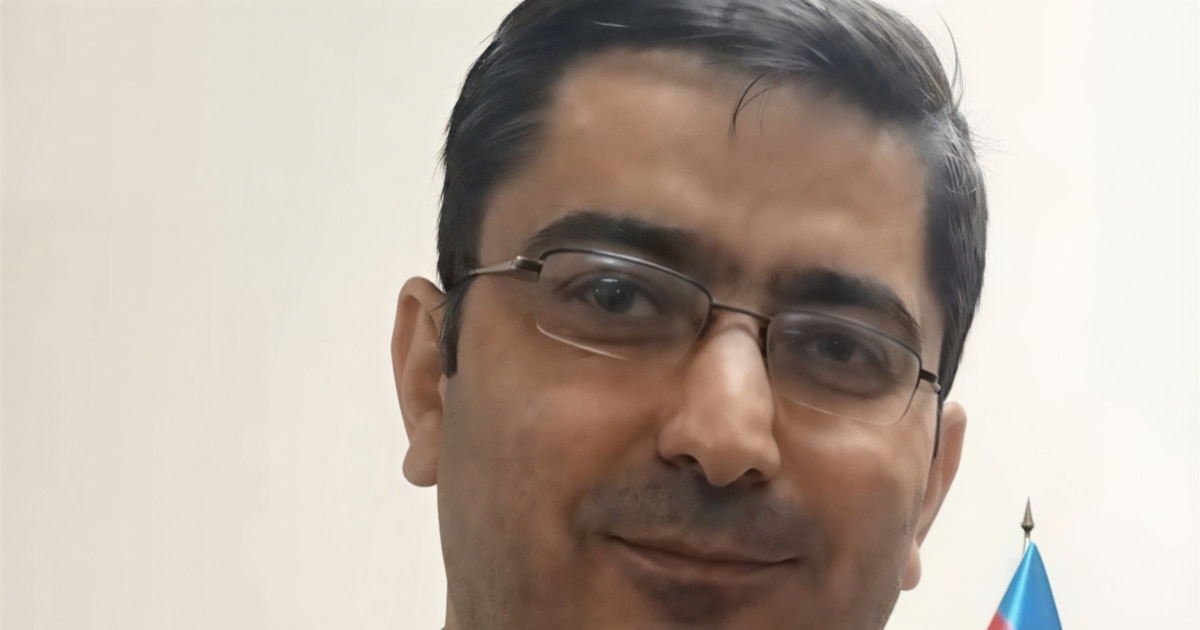
Azerbaijan teacher detained after criticizing government denies stabbing charge, says he and family are being mistreated
An English teacher who has been openly critical of Azerbaijan’s ruling family told a Baku court that he has been held for seven months on a stabbing charge he denies and that his family and he have suffered mistreatment. The accused says his arrest was prompted by social media criticism of the government; the alleged victim has not appeared for the trial.
By Christopher Manley
1,144 views
An English teacher in Azerbaijan who has publicly criticized the country’s leadership told a Baku criminal court that he has been detained and mistreated for months on politically motivated grounds. Deyanat Çələbiyev, a 45-year-old educator, is accused of stabbing a man identified in court documents as Mirsahib Xudaverdizadə. He has been held since December 22, 2025, and denies the accusations, saying that the charges are retaliation for his social media posts critical of President İlham Əliyev and his family.
Çələbiyev’s case is being heard before a panel at the Baku Serious Crimes Court chaired by Judge Mahirə Kərimova. During a hearing on July 16, the defendant complained about conditions surrounding the proceedings and his detention. He said he has been kept in custody for seven months despite maintaining his innocence, describing long, hot waits at court and what he characterized as indifference from the judicial panel. Speaking in Azerbaijani, he told the judges: “Sizi maraqlandırmır ki, bu, insan həyatıdır. Ailəm hər dəfə Mingəçevirdən gəlir. Ailəm dolana bilmir, evdə işləyən yoxdur. Bu istidə Kürdəxanıda qala bilmirəm. Sizin vecinizə də deyil. Gələn dəfə məhkəməyə gəlməyəcəm”.
Prosecutors have charged Çələbiyev under Azerbaijani Criminal Code articles 126.2.4 (intentional infliction of grievous bodily harm with hooligan intent) and 221 (hooliganism). Those provisions carry a combined maximum penalty of up to 11 years in prison. The alleged victim, Mirsahib Xudaverdizadə, did not attend the July hearing; Çələbiyev said the absence undermined the credibility of the accusation, arguing that a genuinely injured person would attend court to see that the truth be established.
Çələbiyev has given a different account of the incident in his testimony. He said that on the day in question he was walking with a laptop in his hand when he was suddenly pushed in the passageway below a building and later accused of being stabbed. He denied ever possessing a knife or injuring anyone and told the court he was detained by police at the scene. He also highlighted that he had long been a vocal critic of the ruling family. On the day before his arrest — December 21, 2025 — he posted on Facebook, “Əliyevin ailə hakimiyyəti ölkəni gücləndirmədi, ölkəni zəiflətdi. Dövlət şəxsləşdirildi, xalq kənarlaşdırıldı, gələcək ipoteka altına qoyuldu”. He and his supporters say his detention is punitive and linked to such criticism.
Human rights observers point to a series of similar prosecutions in recent years in which civic activists, critics and former officials have been accused of stabbing or attacking others. Those tried in such cases who denied wrongdoing include worker-rights advocate Afiyəddin Məmmədov; Kənan Zeynalov (known as Basqal), who served as a bodyguard for opposition politician Əli Kərimli; activists Əhməd Məmmədli and Nicat İbrahim; and former diplomat Emin İbrahimov. Many of those individuals asserted in court that they were not guilty and said the complainants suddenly appeared and claimed to have been injured.
According to lists compiled by local and international human rights groups, there are currently hundreds of people, including Çələbiyev, whom these organizations consider political prisoners in Azerbaijan. The article published alongside this reporting noted that a human rights tally lists 328 people as political prisoners. Azerbaijani authorities reject these characterizations, saying that those named on such lists have been lawfully prosecuted and convicted for criminal offenses.
Çələbiyev’s supporters say his arrest has had immediate economic and social consequences for his family. He told the court he was the family’s sole breadwinner and that relatives repeatedly travel from Mingəçevir to attend hearings. He described the practical hardships caused by his continued pretrial detention, including their inability to sustain themselves and to find respite from summer heat in nearby areas. His lawyer and rights defenders have framed the case as part of a broader crackdown on dissenting voices in Azerbaijan, alleging the misuse of criminal statutes to silence critics.
The case continues to be heard in Baku. Observers and rights groups are likely to watch the proceedings for evidence about the credibility of the alleged victim’s absence, the handling of procedural protections for the defendant, and whether the prosecution produces forensic or other corroborating evidence. The outcome will also be viewed in the wider context of freedom of expression and the treatment of political opponents in Azerbaijan.