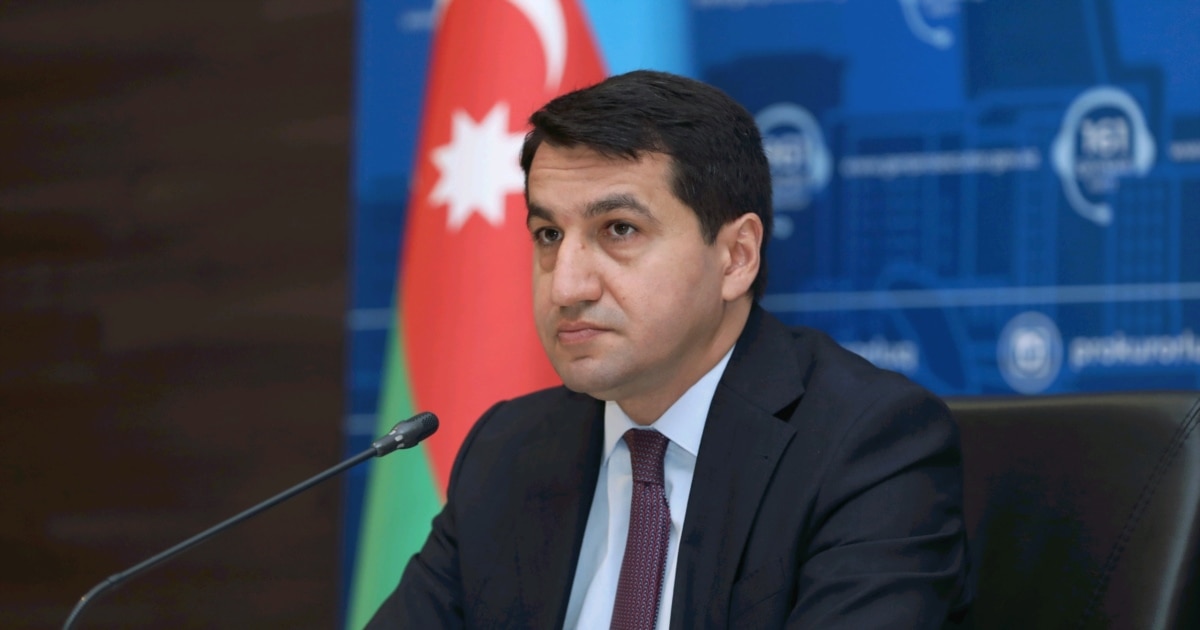
Azerbaijan Presidential Aide Hikmət Hacıyev Meets Armenia’s Armen Qriqoryan in Dilijan to Discuss Peace Agenda
On June 14, Hikmət Hacıyev, an aide to the President of Azerbaijan, and Armen Qriqoryan, secretary of Armenia’s Security Council, met in Dilijan to review the Azerbaijan-Armenia peace agenda and agree on steps to sustain bilateral dialogue. They discussed trust-building measures between civil societies, agreed to continue working-level contacts and confirmed the next meeting will take place in Azerbaijan.
By Vanessa Bergmann
1,026 views
Senior officials from Azerbaijan and Armenia met on June 14 in the Armenian town of Dilijan to discuss the bilateral peace agenda and ways to sustain dialogue aimed at promoting long-term stability in the South Caucasus. Hikmət Hacıyev, an aide to the President of Azerbaijan, and Armen Qriqoryan, secretary of the Armenian Security Council, held a working meeting during which they reviewed a range of issues connected to the peace process, according to a report by the Azerbaijan state news agency AZƏRTAC.
During the talks, both sides emphasized the importance of continuing bilateral dialogue as a vehicle for fostering durable peace and stability in the region. The officials also exchanged views on measures to build confidence between the two countries’ civic actors, underlining that trust-building among civil society would be an important complement to official negotiations.
Hacıyev and Qriqoryan agreed to maintain contacts at the working level, and they confirmed that the next round of talks will be held in Azerbaijan. The decision to alternate venues for meetings was presented as part of efforts to keep momentum in negotiations and preserve channels of communication between the two governments.
The meeting takes place against the long-standing backdrop of the Nagorno-Karabakh conflict, which began to intensify in the late 1980s and led to armed confrontations between Azerbaijan and Armenia. The article notes that in the early 1990s Armenia occupied Nagorno-Karabakh and seven surrounding districts of Azerbaijan, a development that shaped decades of hostility and displacement in the region.
More recent military episodes have altered the territorial status quo. A 44-day war in 2020 and a separate one-day military operation in 2023 resulted, the report says, in Azerbaijan restoring its sovereignty across those territories. In parallel with these military and political shifts, diplomatic efforts have aimed to convert battlefield changes into negotiated settlements and more stable relations.
A substantive diplomatic milestone referenced in the report occurred on August 8 of the previous year, when officials from Azerbaijan and Armenia initialed (paraflayıblar) the text of a draft peace treaty in Washington. According to that parafed text, the parties recognized each other’s territorial integrity and signaled an intention to withdraw mutual claims — a framework intended to underpin a formal peace agreement. The same period saw the resumption of freight transport links between the two countries.
The Dilijan meeting, as reported by AZƏRTAC and carried on AzadlıqRadiosu’s site, therefore represents another step in a cautious, incremental diplomatic process. Continued working-level contacts and civil-society confidence-building measures may help reduce tensions and create space for a comprehensive settlement, but the report gives no timetable for a final treaty or detailed outcomes beyond the agreement to continue talks and hold the next session in Azerbaijan.