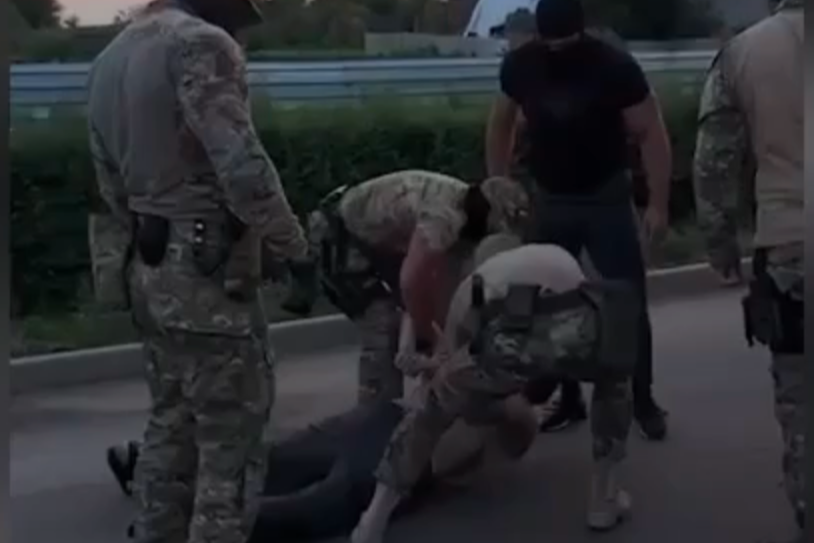
Authorities say Karachay–Cherkessia group married contract soldiers to claim death and injury benefits, seize assets
Russian investigators allege a criminal group in Karachay–Cherkessia arranged marriages with men about to sign military contracts in order to claim state compensation if those soldiers were wounded or killed. Authorities say the scheme yielded roughly ₽35 million ($440,000) from early 2025 until October and that assets worth more than ₽12 million ($150,000) have been seized as part of the probe.
By Christopher Manley
1,074 views
Russian law enforcement agencies have opened criminal investigations after alleging a scheme in Karachay–Cherkessia in which women married men preparing to sign contracts with the Defence Ministry in order to later claim state compensation if those soldiers were wounded or killed. Authorities in the republic’s Interior Ministry and the Volgograd Region Prosecutor’s Office said the group, formed in late 2024, illegally obtained about ₽35 million (roughly $440,000) from the beginning of 2025 through October.
According to investigators, the alleged operation targeted men who were about to become contract soldiers. The defendants reportedly married the men; when the soldiers were subsequently injured or killed in the course of service, the women or their associates then filed for and received official payments intended for family members. Law enforcement says the group planned to obtain an additional ₽25 million (about $310,000) from further cases but were prevented from doing so after investigators intervened.
Authorities released details of the benefits at the centre of the allegations. The Karachay–Cherkessia Labour Ministry says the region pays a one-off signing bonus for contract soldiers of ₽3.1 million ($40,000) — an amount that the ministry notes had been ₽2.4 million ($30,000) until July 2026. Families of soldiers who were killed and had permanent residence in the republic are eligible for a one-off regional payment of ₽1 million ($13,000), supplemented by federal payments that can total ₽5 million ($65,000) and ₽3 million ($40,000) distributed among eligible relatives. Payments for serious and minor injuries are reported at ₽300,000 ($3,700) and ₽100,000 ($1,300), respectively.
Investigators say the group consisted of nine people — five women and four men — and that the defendants were members of the Roma community, according to the Volgograd Region outlet V1.RU. Authorities reported identifying 18 completed fraud episodes and seven attempted offences. In one case that drew investigators’ attention, a marriage was registered one day before a man signed a military contract; after the soldier’s death, his relatives said they had never seen the woman listed as his wife and were unaware of any cohabitation.
Criminal cases were opened under articles addressing the organisation of a criminal community and participation in large-scale fraud and attempted large-scale fraud. As part of the inquiry, investigators have seized assets belonging to the defendants valued at more than ₽12 million ($150,000). The case materials were later transferred to the Main Investigative Directorate of the Russian Interior Ministry in the Volgograd Region for further action.
The allegations in Karachay–Cherkessia are not isolated in Russia. Media reports have previously described other incidents in which women were accused of entering into marriages with soldiers shortly before those men were sent to the front, prompting public outcry. In one widely reported case last year, a nurse at a military hospital was dismissed after being accused of marrying five soldiers shortly before their deaths in order to collect state benefits.
Authorities have not publicly reported whether the defendants in the Karachay–Cherkessia case have pleaded guilty, and the investigation appears ongoing. The accusations raise several broader concerns: the potential exploitation of wartime compensation systems intended to support bereaved families; the strain such fraud places on the integrity of official payments; and the sensitivity required when cases involve members of minority communities, whose public identification may fuel stigma.
Investigative authorities and local prosecutors have positioned the case as an organised criminal enterprise, while reporting by regional outlets has provided details on the alleged sequence of marriages and payments. The outcome of prosecutions, any subsequent court proceedings, and whether authorities will recover additional funds remain to be seen as the files move through the investigative and judicial systems.