Attack on Moscow Signals the Russia-Ukraine War Has Come Closer to Ordinary Russians
An attack by Ukrainian forces on Moscow has brought the war home for many Russians, underscoring that the conflict can now reach the capital and altering how residents and officials perceive security and risk. The strike has symbolic and practical implications, challenging Moscow's aura of safety and prompting questions about Russia’s defensive posture, domestic reaction and the risk of further escalation.
By Clémence Desjardins
1,028 views
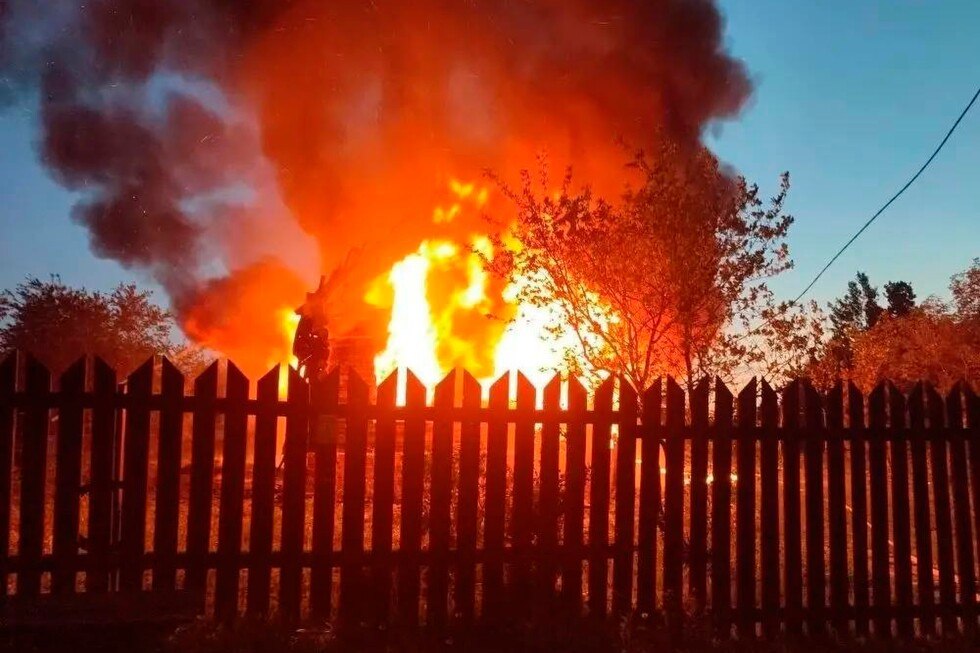
An attack on Moscow by Ukrainian forces has underscored a stark reality: the war between Russia and Ukraine is no longer confined to the front lines but is reaching deep into Russian territory, including the area around the capital. In one of the largest such operations, Ukrainian drones struck the Moscow region as part of a wider barrage across Russia that local authorities said killed at least four people — including three near Moscow — and wounded roughly a dozen others. A woman was reported killed when a drone hit her home in Khimki, a city just northwest of the capital, and two men died in a village a short distance to the north, while falling debris briefly disrupted operations at Russia's largest airport. Ukrainian President Volodymyr Zelenskyy confirmed the strikes and called them "entirely justified," framing them as a message to Moscow that its war "must end." Analysts characterized the operation in part as retaliation for sustained Russian strikes on Kyiv, where Russian drones had wounded civilians in the same period.
The significance of the attack lies less in its immediate physical toll than in what it represents. For much of the war, now in its fifth year, residents of Moscow and the surrounding region have been largely insulated from the destruction that has become routine in Ukrainian cities. Each strike that reaches the capital's outskirts chips away at that sense of distance, forcing ordinary Russians to reckon with a conflict their government has long described in sanitized terms. Ukraine's expanding long-range capabilities — drones now fly hundreds of miles to hit targets deep inside Russia — have also been directed at oil refineries and export infrastructure, sending up smoke visible from space and, in some cases, depositing pollution on Black Sea resort areas. Those strikes are intended to squeeze a key source of revenue funding the invasion, though their economic effect has so far been blunted by higher oil prices and an easing of certain sanctions.
Humanitarian and civilian considerations remain central. Attacks in or near population centers increase the risk of civilian harm and infrastructure damage, complicating efforts to protect noncombatants and maintain essential services. Even where casualties are not detailed or confirmed, the threat to civilians and the disruption to daily life are important aspects of the incident's significance.
The broader context is a conflict that has evolved over time, with periodic strikes and military activities affecting both front-line regions and, at times, deeper parts of each country. An attack on Moscow amplifies the conflict's visibility and raises questions about defensive preparedness and crisis management in Russia. It also underscores the persistent uncertainty that characterizes the war and the challenges of forecasting how it will develop. Notably, the reach of these strikes has revived criticism from pro-war commentators inside Russia who question the adequacy of the country's air defenses, even as the Kremlin has typically sought to play down the damage and brand such attacks as terrorism.
In the coming days, attention will focus on official Russian and Ukrainian statements, any assessments of damage and casualties, and how Moscow responds in terms of security policies and public messaging. Observers will also watch for signs of escalation or de-escalation, and for any shifts in the conflict that stem from such high-profile incidents. For residents of Moscow and for Russians more broadly, the attack is likely to leave a lasting impression: a reminder that the war, even when fought far from the capital, can reach into the places once thought safest.