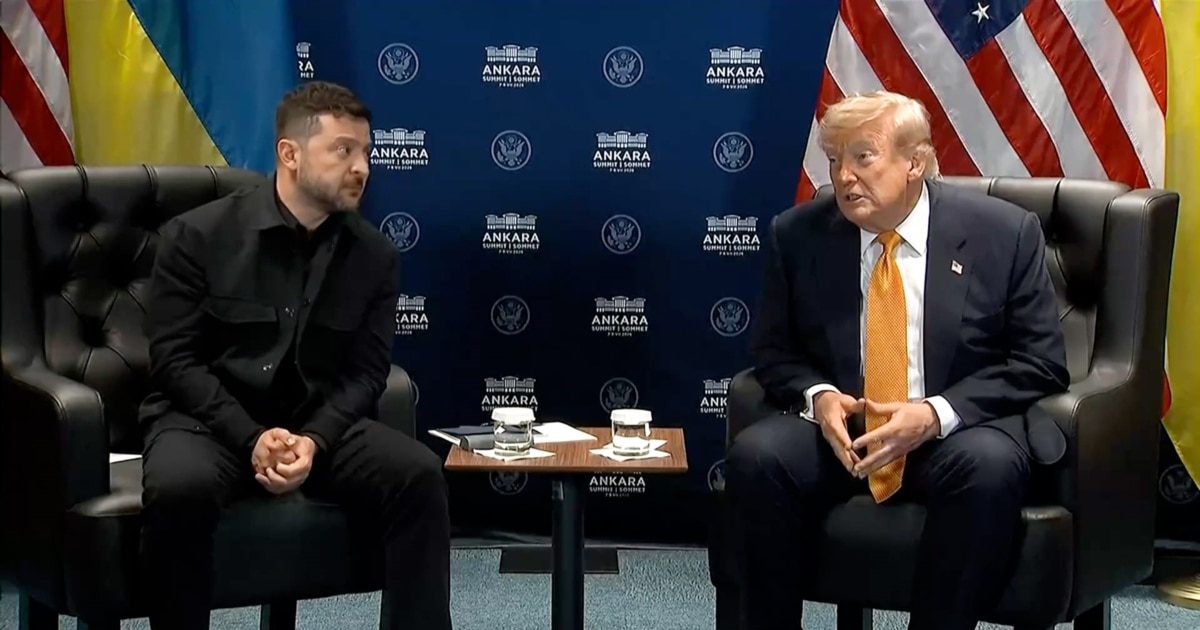
At NATO Summit in Ankara, Trump Says He Believes Putin 'Wants to Reach a Deal' to End War in Ukraine
Speaking at the NATO summit in Ankara, U.S. President Donald Trump said he believes Russia is ready to reach an agreement to end the war in Ukraine. A Radio Free Europe/Radio Liberty correspondent asked what had led him to that conclusion and what guarantees might help ensure Russia would not attack Ukraine again.
By Christopher Manley
1,075 views
U.S. President Donald Trump told attendees at the NATO summit in Ankara, Turkey, that he believes Russia is prepared to reach an agreement to end the war in Ukraine. The comment, delivered during his remarks at the gathering of NATO leaders, was picked up by Radio Free Europe/Radio Liberty (RFE/RL), whose correspondent Zorjana Stepanenko posed follow-up questions about the basis for Mr. Trump’s assessment and the safeguards that could prevent future aggression.
According to the brief account published by RFE/RL, Stepanenko asked the president what led him to conclude that Russia was ready to make a deal and what kinds of guarantees would be necessary to ensure that Russia would not attack Ukraine again in the future. The exchange underscores the attention given to public statements by senior leaders at NATO events, where comments can carry diplomatic weight and affect expectations about the prospects for negotiation and security arrangements.
The remarks are notable because any assertion that a party to an ongoing conflict is ready to negotiate can influence perceptions among governments, parties to the conflict, and the wider international community. Questions about what constitutes acceptable guarantees are central to discussions of cease-fires and peace agreements, particularly where concerns persist about the potential for renewed hostilities.
RFE/RL’s account highlights the role of the press at international gatherings in pressing leaders for specifics on proposals and positions that could have direct consequences for the safety of civilians and the stability of the region. The correspondent’s question reflects broader debates about how to construct and monitor guarantees in situations of armed conflict — issues that touch on accountability, enforcement mechanisms, and the protection of human rights.
Beyond the direct exchange reported, the episode is also a reminder of the complex interplay between diplomatic signaling and on-the-ground realities in conflict zones. When leaders speak publicly about potential agreements, affected populations, humanitarian organizations, and international institutions often look for concrete measures that would translate political commitments into lasting protections. The brief interaction reported by RFE/RL did not, in itself, provide those details.
Observers and parties to the conflict commonly view the specifics of any agreement — including verification, withdrawal, security guarantees, and mechanisms for enforcement and accountability — as decisive for whether a settlement will hold and whether civilians will be protected from renewed violence. Questions about guarantees therefore go to the heart of how durable peace might be achieved and what role international actors, including NATO members, could play in supporting such arrangements.
The RFE/RL report is limited in scope and focuses on the president’s statement and the question asked by its correspondent. Further clarification or elaboration from the U.S. delegation, other NATO leaders, or the parties directly involved in the conflict would be needed to understand whether concrete negotiation steps are under way or what forms of guarantees might be considered. For now, the public exchange at the NATO summit adds to ongoing international scrutiny of prospects for ending the war and securing durable protections against future aggression.