As Russian Strikes Damage Kyiv’s Bridges, City Pursues Pontoon Crossings, Hydrofoils and Tunnels — but Major Obstacles Remain
A wave of Russian attacks that damaged three bridges across the Dnipro and killed nine people has left Kyiv struggling to maintain basic east–west connectivity. City officials have limited crossings and launched plans for 21 alternative points, including floating pontoons, winged rapid vessels and potential tunnels, but engineers warn that technical, logistical and security problems make quick fixes unlikely.
By Alexander Walter
577 views
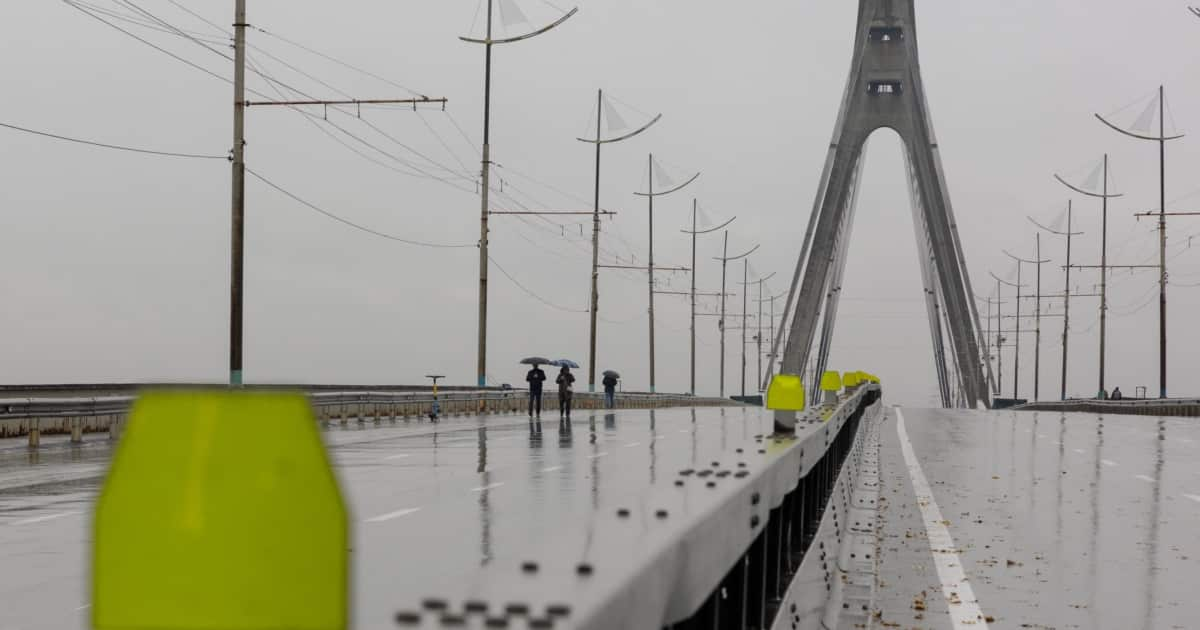
Russian strikes on Kyiv’s Dnipro bridges have escalated in recent days, damaging at least three crossings during a multi-hour assault on November 20 that Ukrainian officials say killed nine people. The bombardment has compounded other strikes on power and heating infrastructure across the country, leaving residents of the capital facing prolonged, dangerous and unpredictable commutes between the city’s right and left banks.
Kyiv Mayor Vitali Klitschko has responded by restricting traffic on some bridges to public transport only — buses, trolleybuses and metro trains — and by fully closing one of the damaged crossings. Nevertheless, many residents report that their journeys now take hours. RFE/RL correspondents in Kyiv heard from commuters who said morning trips across the river can take nearly four hours, forcing people to wake earlier even after restless nights punctuated by air‑raid alerts. For some, evenings and mornings have become “real adventures,” when nobody knows whether they will reach work or return home safely.
Ukrainian authorities view the strikes on capital bridges as part of a broader strategy by Russia aimed at eroding civilian morale ahead of winter, rather than at military necessity. Kyiv does not rely on these bridges to support frontline operations in the east, officials say, and the attacks therefore appear intended to disrupt daily life by severing transport links and degrading utilities.
To restore connectivity, the city began work in October on 21 alternative crossing points, including plans for floating pontoon bridges. But implementing pontoons has proved harder than anticipated. The Dnipro is wide but relatively shallow in places and commonly freezes in winter, complicating engineering calculations. Road access to the riverbanks is limited at many sites, creating bottlenecks at bridgeheads. Engineers who spoke to Europa Liberă caution that the temporary works are being rushed. Anna Miniukova, a transport and tunnel engineer, said river currents have already washed away some of the sand and rock placed for embankments because initial works were carried out without a full technical project, under simplified procurement rules intended to speed delivery.
Authorities initially suggested pontoons could be operational within two to three months, with some estimates pointing to February as the earliest date for restored crossings. Experts like Miniukova say those timelines are unrealistic, particularly because several necessary materials must be imported.
Other options under consideration include fast passenger vessels with hydrofoil technology, formerly used in the Soviet era, which could shuttle people across the river. But these vessels come with steep trade-offs: they require new docking infrastructure and road access at both banks, their passenger capacity (around 80 seats per vessel) would only replace a fraction of bridge traffic, and their fuel consumption is very high. Mobility expert Dmitro Bespalov warned that hydrofoils consume unusually large amounts of diesel — he recalled figures on the order of 120 liters per hour — making operational costs prohibitive in the current context.
Longer-term proposals have included digging tunnels beneath the Dnipro. Kyiv’s extensive Soviet-era metro network includes two lines that reach from the right bank to the left, but trains currently cross the river on bridges, not underground. Officials have identified five potential tunnel alignments and say an unnamed American construction firm has expressed interest in participating in feasibility studies or construction. Yet engineers and reconstruction specialists stress that tunneling would be a multiyear undertaking. Vitalii Selik, co-founder of the reconstruction charity Smylyvi Vidnovliuvaty (Dare to Rebuild), estimated that even in optimal conditions a tunnel would take three to six years with continuous funding and stable security — and in Central Europe comparable projects often require five to ten years. Beyond timescales, Selik questioned whether workers would accept employment at visible, massive construction sites that would be obvious targets from the air.
Some Kyiv residents have already adapted improvised coping strategies. Faced with stalled traffic and crowded public transport, many people now walk across bridges to save time. Others, like the man who identified himself as Serhii, are searching for jobs on the east bank to avoid daily crossings altogether; he admitted to thinking bitterly of Russian President Vladimir Putin. Another commuter joked that if winter froze the Dnipro solidly, he might borrow huskies from an animal shelter and harness a sled to cross the river — a grim illustration of how desperate and creative individual solutions have become.
Officials say the search for alternatives will continue on multiple fronts, from hastily constructed pontoons to discussions about costly, long-term engineering projects. But engineers, mobility experts and reconstruction activists warn that there are no simple, immediate fixes: the combination of river conditions, the need for new shore infrastructure, high operational costs and the ever-present danger of further strikes means that restoring dependable east–west connectivity in Kyiv will remain a complex challenge throughout the winter and beyond.
This reporting is based on coverage by Radio Free Europe/Radio Liberty’s Ukrainian service and reporting by Europa Liberă.