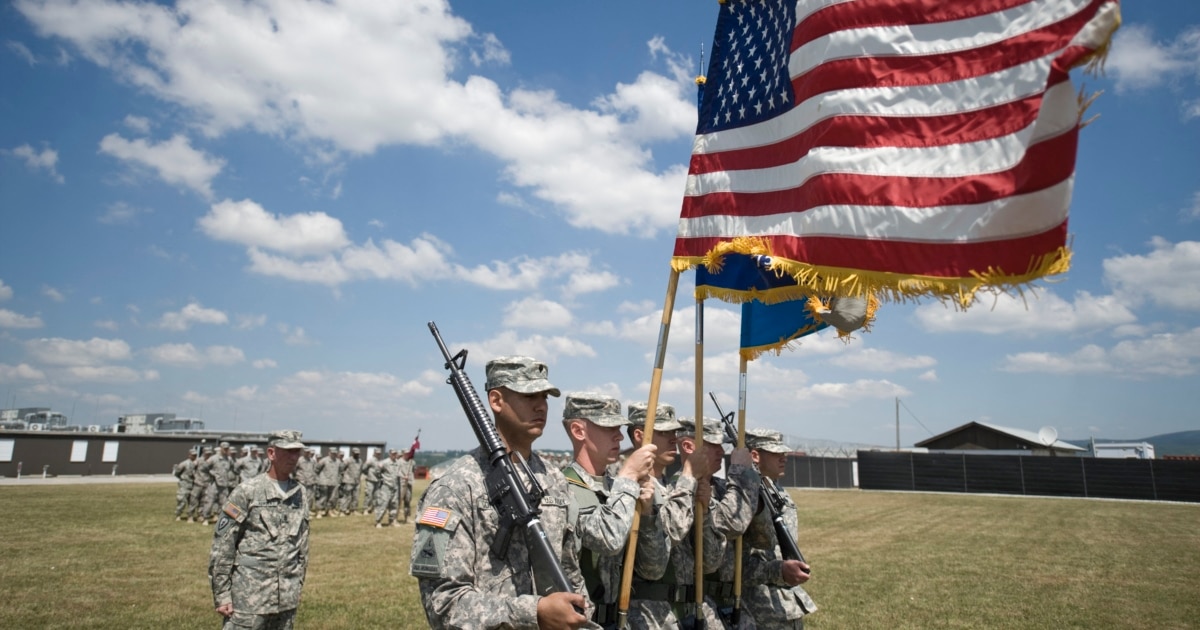
As NATO Reorganizes, Kosovo Questions Future of U.S. Troops and Bondsteel Base
With NATO moving toward a concept Washington calls NATO 3.0, allied officials are reorganizing the long-standing KFOR mission in Kosovo and the United States is reviewing its force posture in Europe. Kosovo’s prime minister has urged the U.S. to solidify its presence by transforming Camp Bondsteel into a permanent base, while NATO and U.S. authorities say reorganization aims to keep strategic influence but have given few concrete details about troop numbers or capabilities.
By Alexander Walter
1,013 views
For more than two decades the presence of American soldiers on Kosovo soil has been more than a contribution to a NATO peacekeeping mission: it has been one of the main guarantees of security for the young state. Now, as the United States reconsiders its military commitments in Europe and presses its allies to shoulder a larger share of conventional defence, questions about the future of that American presence have returned to the fore.
At the centre of the debate is NATO’s effort to adopt what U.S. strategists have dubbed NATO 3.0 — a rebalancing of responsibilities across the Atlantic that envisions European allies taking primary responsibility for conventional defence of the continent while the United States retains a redefined role. That broader shift has prompted a reorganization of KFOR, the NATO-led peacekeeping mission in Kosovo that has operated since the end of the 1999 war.
The U.S. footprint in Kosovo has shrunk significantly since the immediate post-war years. From the thousands of American troops who served in the years following the conflict, fewer than 600 U.S. soldiers now remain in the mission, and there has been no official confirmation that their numbers will be further reduced. Nevertheless, signs of change have appeared: on October 12, active-duty U.S. units assumed command of KFOR’s Regional Command East at Camp Bondsteel for the first time in more than a decade, taking over from the Florida National Guard.
The shift in command may seem technical, but it comes at a sensitive moment. National Guard units typically serve part time and are mobilized in different ways than active-duty forces, which are full-time soldiers. The U.S. military characterized recent rotations as driven by force availability and mission needs but has not clarified whether the change implies altered troop numbers, capabilities or responsibilities on the ground in Kosovo. Radio Free Europe/Radio Liberty sought details from the U.S. Department of Defense regarding the nature and duration of the rotation and on plans for U.S. force presence in Kosovo through 2026 and 2027, but received no reply.
Kosovo’s government has pushed for stronger U.S. commitments. Prime Minister Albin Kurti has called for Camp Bondsteel — the largest U.S. facility in Kosovo — to be converted into a permanent American base. Kurti argues that a permanent U.S. presence would serve as a guarantor of peace and security in Kosovo and the region and would provide a strategic base for NATO operations in southeastern Europe.
NATO, while confirming that a reorganization of KFOR is underway, has sought to reassure the public that the mission’s mandate as defined by the United Nations remains unchanged and that the Alliance is committed to the security of all communities in Kosovo and the stability of the Western Balkans. In written comments to Radio Free Europe/Radio Liberty, a NATO official tied the KFOR reorganization to the transition toward NATO 3.0, saying the process is intended to maintain strategic effect while allowing more efficient use of resources under sustained European leadership. NATO did not specify whether recent American rotations at Bondsteel are part of that reorganization.
The U.S. reassessment is part of a much broader review of American military posture in Europe. In February, Pentagon official Elbridge Colby outlined aspects of the NATO 3.0 vision; in June, U.S. Defense Secretary Pete Hegseth announced a six-month review of U.S. force deployments and bases across Europe. Analyses by institutions such as the Center for Strategic and International Studies indicate the review will address not only numbers of troops but also locations and the specific military capabilities Washington will continue to offer NATO, including specialized assets that many European militaries lack.
Former U.S. defense official Jim Townsend said he expects any outcome for KFOR to be linked to that broader review: allied decisions about postures and capabilities in Europe will shape what the U.S. contributes to Kosovo. Townsend warned that while European partners may accept greater responsibility, Europe currently lacks some of the force projection and enabling capabilities — intelligence, persistent surveillance, strategic transport, aerial refuelling and long-range strike — that the U.S. provides, and rebuilding or expanding those capacities will take time.
Observers note, however, that KFOR is not a conventional territorial defence force akin to those envisaged under NATO 3.0: it is a peacekeeping mission mandated to maintain a safe environment and freedom of movement. How NATO and the United States reconcile the Alliance-wide shift in responsibilities with the specific security needs and expectations of Kosovars will be a critical question in the coming months, particularly if the ongoing Pentagon review releases conclusions around the end of November as some sources have suggested. For Kosovars and regional policymakers, the stakes are clear: changes in who provides security — and with what capabilities — will influence stability across the Western Balkans.