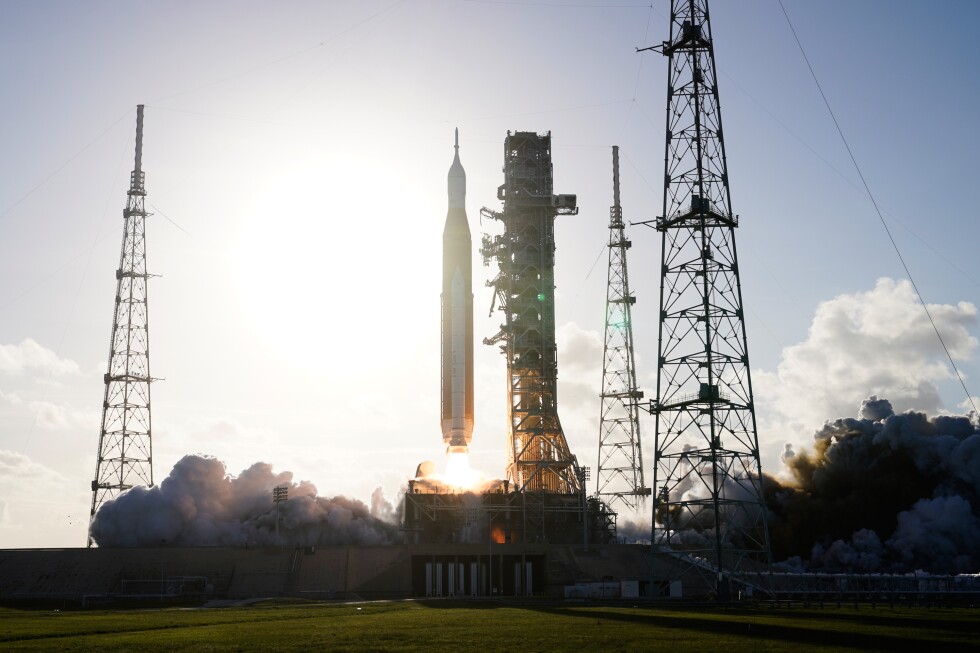
Artemis II Crew Reaches Orbit, Launching Historic Return to the Moon
NASA's Artemis II astronauts have reached orbit after liftoff, embarking on what news reports describe as the agency's first crewed lunar voyage in decades. The milestone represents a critical step in efforts to restore human missions beyond low Earth orbit and to test the systems needed for sustained exploration of the moon and beyond.
By MARCIA DUNN
1,139 views
NASA’s Artemis II mission reached a major milestone when its astronauts successfully attained orbit after launching toward the moon, marking what news accounts describe as the agency’s first crewed lunar voyage in decades. The successful climb into orbit sends the crew on a trajectory bound for lunar vicinity and underscores a renewed U.S. effort to return humans to the moon after a prolonged hiatus.
The flight represents a central objective of NASA’s broader Artemis efforts, which aim to expand human exploration of the lunar environment. With the Artemis II crew now in orbit, mission managers will be able to evaluate spacecraft performance with a human complement on board as the vehicle moves through the next stages of its planned mission profile. Officials have characterized the achievement as both symbolic and practical: symbolic because it restores crewed access to deep space, and practical because it provides essential data and experience for future operations.
Reaching orbit is the first in a sequence of demanding milestones that must be met as the mission continues toward the moon. As the spacecraft moves away from Earth, controllers and astronauts will work through planned maneuvers and system checks designed to demonstrate the reliability of life-support systems, navigation and communications in a crewed flight context. These activities are intended to validate elements of the architecture that will support later missions and expanded lunar presence.
The mission’s significance extends beyond a single flight. Achieving a crewed lunar transit for the first time in decades has implications for scientific research, technology development and international collaboration. A successful Artemis II will bolster confidence in hardware and procedures that could be used for more ambitious operations, including longer stays on the lunar surface, utilization of lunar resources and eventual missions that extend human reach further into the solar system.
Public interest in the mission has been high, and coverage has noted the historic nature of the flight. News outlets framed the launch as a turning point for NASA, highlighting both the accomplishment of sending astronauts back toward the moon and the work still required to turn short-term missions into sustainable exploration programs. The mission’s progress will be closely watched by policymakers, international partners and commercial partners involved in space activities.
As Artemis II continues on its way, mission teams will assess performance and report updates at key milestones. The outcome of this mission will inform planning for subsequent flights and the timeline for establishing a more persistent human presence in lunar orbit and on the surface. For now, the successful attainment of orbit is being hailed as an important step forward in a new era of crewed lunar exploration.
The unfolding mission also sits within a broader context of renewed global interest in the moon and deep space. Space agencies and commercial companies worldwide are pursuing projects that could be enhanced by reliable lunar access, including scientific investigations, technology demonstrations and infrastructure development. The Artemis II achievement therefore not only marks a national milestone for the United States and NASA but also contributes to momentum in the international community for returning people to the moon and exploring farther reaches of space.
Astronauts, mission controllers and the broader community engaged in spaceflight will now focus on the next phases of the mission as it proceeds toward its objectives. Observers say the lessons learned and data gathered from this flight will play a crucial role in shaping the future of crewed exploration beyond low Earth orbit.