Armenia’s ‘Pseudo-Exhibit’: Confiscated Art, Legal Questions and the Politics of Spectacle
A small, unnamed exhibition at the National Gallery of Armenia displayed works seized from former finance minister Gagik Khachatryan in an event organised by the Investigative Committee that critics say was a staged spectacle rather than a transparent act of public accountability. Lawyers, rights advocates and gallery staff have questioned the legality and purpose of publicly exhibiting items listed as material evidence, and have criticised the wider pattern of highly publicised raids and arrests under Prime Minister Nikol Pashinyan.
By Christopher Manley
825 views
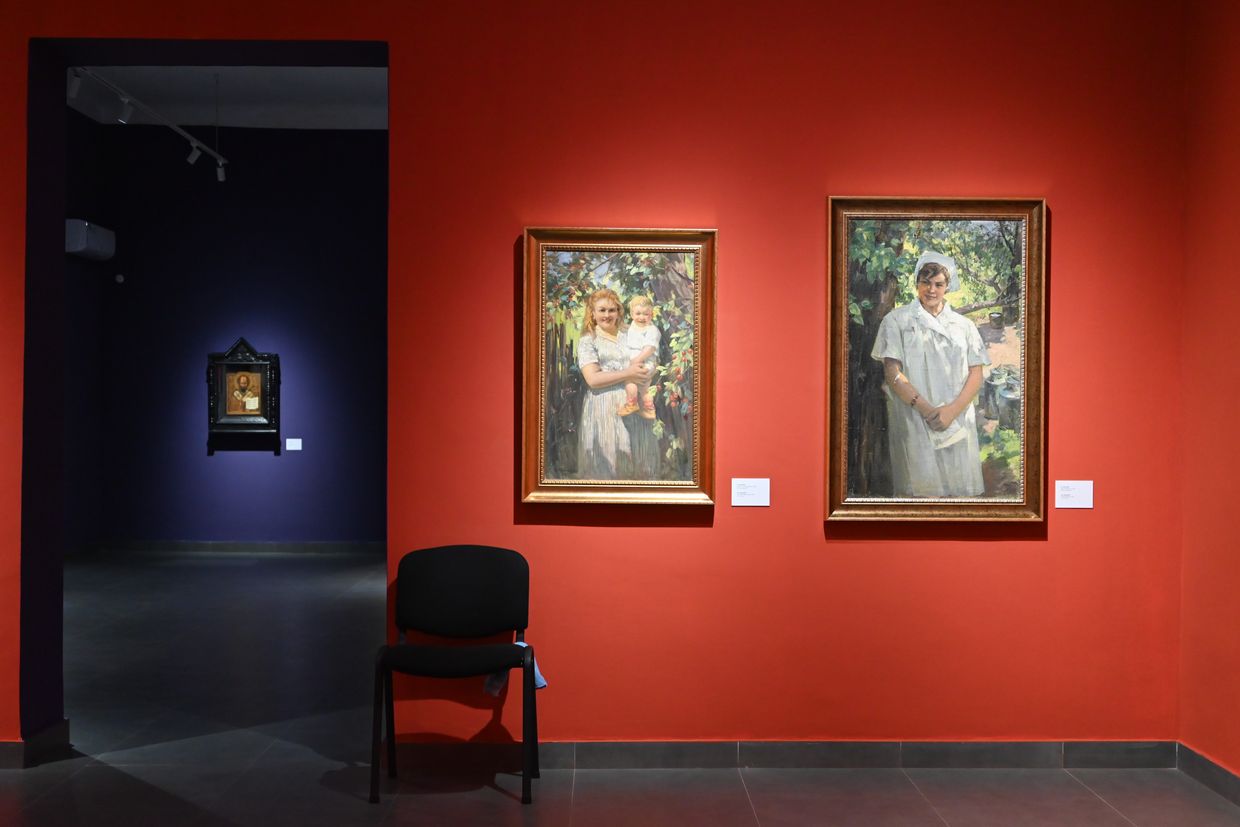
In early October, a modest, nondescript temporary show on the ground floor of the National Gallery of Armenia presented roughly 30 works — from a 1913 canvas by Gevorg Bashinjaghyan to a copper portrait and an antique map of South America. What the display lacked in art-historical coherence it made up for in provenance: every item on view had been seized by Armenia’s Investigative Committee from the home of Gagik Khachatryan, a former finance minister and head of the State Revenue Committee now facing charges including large-scale bribery and money laundering.
The exhibition had no title, no curator credited, and — at least at the time of OC Media’s visit — no record on the National Gallery’s website. The public first learned of the show through a video released by the Investigative Committee on 7 October that featured Education Minister Zhanna Andreasyan, Prosecutor General Anna Vardapetyan and Investigative Committee Chair Artur Poghosyan viewing the works with a guide. When OC Media visited a week later there were no other visitors; a docent said she did not know the exhibition’s name or the works on display and that the show "might be collected by the end of the day." Other gallery staff could not explain who had authorised the showing.
The Investigative Committee later confirmed that 70 paintings had been seized from apartments linked to Artyom and Gagik Khachatryan and were "recognised as material evidence" and placed in the care of the National Gallery during the preliminary investigation. The committee did not, however, answer questions about why it had chosen to exhibit the paintings, why the show had no name or curator, or why it was not publicly advertised.
Khachatryan’s legal team disputes both the seizure and the exhibition. Lawyers argue many of the roughly 70 canvases were not his property but belonged to relatives, and that neither investigators nor prosecutors asked the family about the works’ origins before seizing and displaying them. They contend that putting the paintings on public display undermines the assertion that they are material evidence and breaches the property and privacy rights of family members. The lawyers have sent written inquiries to the Investigative Committee and have filed an application with the European Court of Human Rights challenging Khachatryan’s arrest and detention on health grounds; Khachatryan was brought to court on a stretcher and his family says he suffers from a serious spinal condition.
Rights advocates say the episode fits a broader pattern under Prime Minister Nikol Pashinyan, who has made returning allegedly ill-gotten assets a public-and-political project. A 2020 law on confiscation of property of illegal origin and Pashinyan’s frequent social-media posts under the hashtag "Bit by Bit" have been used to highlight properties reclaimed by the state. Law enforcement agencies have embraced visual spectacle: videos released during earlier raids and arrests emphasised luxury interiors, piles of cash and luxury cars as shorthand for corruption. Critics argue these visuals are aimed more at shaping public perception than at demonstrating adherence to legal procedure.
The high-profile arrest of businessman and politician Gagik Tsarukyan has amplified concerns about tactics. NSS footage of raids on his properties in 2020 and again after the June 2026 parliamentary elections showed showy scenes — taxidermy, upscale cars and banknotes — rather than laying out precise charges or legal grounds. Video of Tsarukyan’s 2026 arrest, in which officers forced the 70-year-old to the ground and handcuffed him with evidently ill-fitting cuffs, prompted the Office of the Human Rights Defender to open a review into compliance with legal standards on the use of force and restraint. Defender Anahit Manasyan emphasised that detention and use of force must respect the principles of legality, necessity and proportionality established by the European Court of Human Rights.
Local human-rights figures have similarly criticised the treatment of Khachatryan. Activist Zaruhi Hovhannisyan warned that public spectacle risks shifting focus from accountability to violations of personal dignity. Artur Sakunts of the Helsinki Citizens’ Assembly Vanadzor Office said that presenting a man in the courtroom on a stretcher was an affront to human dignity and that the court should have prevented such demeaning treatment.
The National Gallery declined to comment on the exhibition. The Investigative Committee’s handling of both the seizures and their public presentation raises questions about the boundary between legitimate public accountability and the staging of "pseudo-events" — planned spectacles designed primarily to be reported and to shape public opinion. For lawyers and rights advocates, the unresolved questions about ownership, evidentiary status and the dignity of suspects remain significant legal and human-rights concerns as Armenia pursues high-profile anti-corruption actions.