Armenian Opposition Rejects Azerbaijani Influence Claims as Government Moves Toward New Constitution
Opposition factions in Armenia have strongly rejected what they describe as attempts to impose an 'Aliyev constitution' after Prime Minister Nikol Pashinyan signaled plans to pursue a new charter and possible talks with Azerbaijan. Ruling party officials say the text to be proposed will be Armenian and subject to a public decision, while opposition leaders warn that adopting a new constitution under foreign pressure would invite further demands and betray national interests.
By Clémence Desjardins
809 views
Armenia’s political debate over a proposed new constitution escalated this week as opposition lawmakers rejected suggestions their country might adopt a charter dictated by Azerbaijan, while government figures insisted any change would be Armenian, transparent and subject to public decision. The dispute centers on whether constitutional amendments are being advanced in response to pressure from Baku as part of a broader effort to conclude a peace treaty.
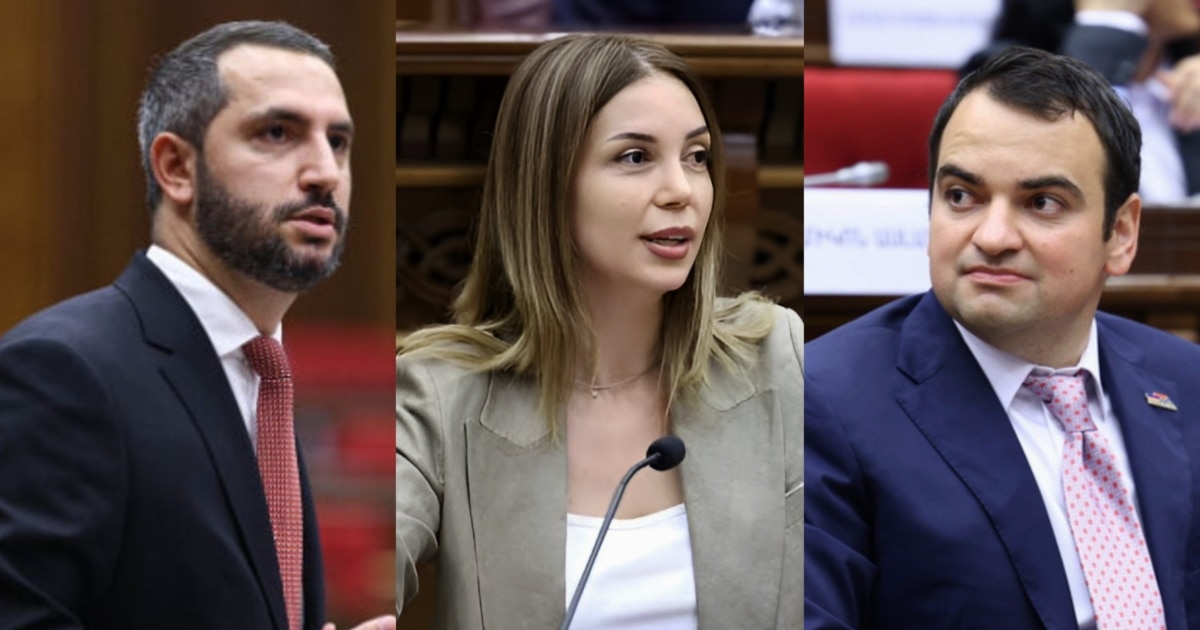
Narek Karapetyan, leader of the opposition "Strong Armenia" faction in the National Assembly, told reporters that "an Aliyev constitution cannot pass in Armenia" and that no foreign leader should decide the country’s basic law. Karapetyan was responding to remarks by Prime Minister Nikol Pashinyan and reiterated the opposition’s position that the peace treaty language signed in principle does not contain a clause requiring constitutional changes. Still, he noted that after a preliminary accord last August, authorities in Baku demanded changes to Armenia’s constitution, asserting that the preamble’s reference to Armenia’s Declaration of Independence contained territorial claims against Azerbaijan.
Opposition MPs say adopting a new constitution under such circumstances would amount to yielding to Azerbaijani dictates. They stress that the ruling Civil Contract party lacks the parliamentary votes to unilaterally send a new constitution to a referendum without support from at least six opposition deputies. Civil Contract denies that it is acting at Azerbaijan’s behest.
Prime Minister Pashinyan has said his immediate task is to find answers to the opposition’s questions, hinting that those answers may come from outside Armenia — an apparent reference to negotiations with Azerbaijan’s president. He also warned that the government would generate public pressure if the opposition blocked a constitutional referendum. Karapetyan rejected that line, arguing it is unreasonable for the public to be pressured into accepting a proposal driven by external interests and refusing to commit to being persuaded by such tactics.
Anna Grigoryan, head of the "Hayastan" parliamentary faction, warned that adopting a new constitution under Azerbaijani pressure would not be the final concession. "We are convinced that a constitutional change, the adoption of an Aliyev-style constitution, will not be the last point for new demands," she said, arguing that past events showed concessions are typically followed by additional claims. Grigoryan expressed distrust of both Pashinyan and Azerbaijani President Ilham Aliyev, saying even a written guarantee from Baku that it would sign a peace treaty after constitutional change would not be trustworthy given what she described as a pattern of actions by the Pashinyan-Aliyev tandem against Armenian interests.
Parliament Speaker Ruben Rubinyan rejected the opposition’s framing that Armenia would adopt an "Aliyev constitution." He said a proposal will be published in textual form and insisted the draft would be "Armenian and adopted by the people." Rubinyan asked rhetorically what prevented the opposition from giving parliament the technical votes to allow the popular decision, suggesting that if deputies oppose the proposed text they can still campaign against it before a referendum. He described the opposition’s outright rejection of an unannounced proposal as puzzling and urged that the legitimate questions raised by lawmakers be answered.
Rubinyan acknowledged that the opposition’s questions about what guarantees exist that Azerbaijan would sign a peace treaty after constitutional changes are legitimate and said answers would be sought "from everywhere." He did not detail what those guarantees might be. Pashinyan has previously said he would try to convince the opposition to back the referendum and has not ruled out early elections as a remedy if consensus cannot be achieved, though he recently indicated a vote might yet be avoided.
The standoff highlights deeper tensions over sovereignty, democratic process and trust in leadership at a sensitive moment for Armenia as it navigates negotiations with its larger neighbor. Opposition leaders fear that constitutional alteration under external pressure could set a precedent for further territorial or political demands, while government officials say publishing a text and allowing a popular decision will preserve Armenian agency. The outcome will shape not only the legal framework of the state but also the credibility of Armenian institutions in managing negotiations that have profound implications for security and national identity.