Armenia Drops Proposal to Change Funeral Benefit; Draft Law Will Not Be Sent to Parliament, Minister Says
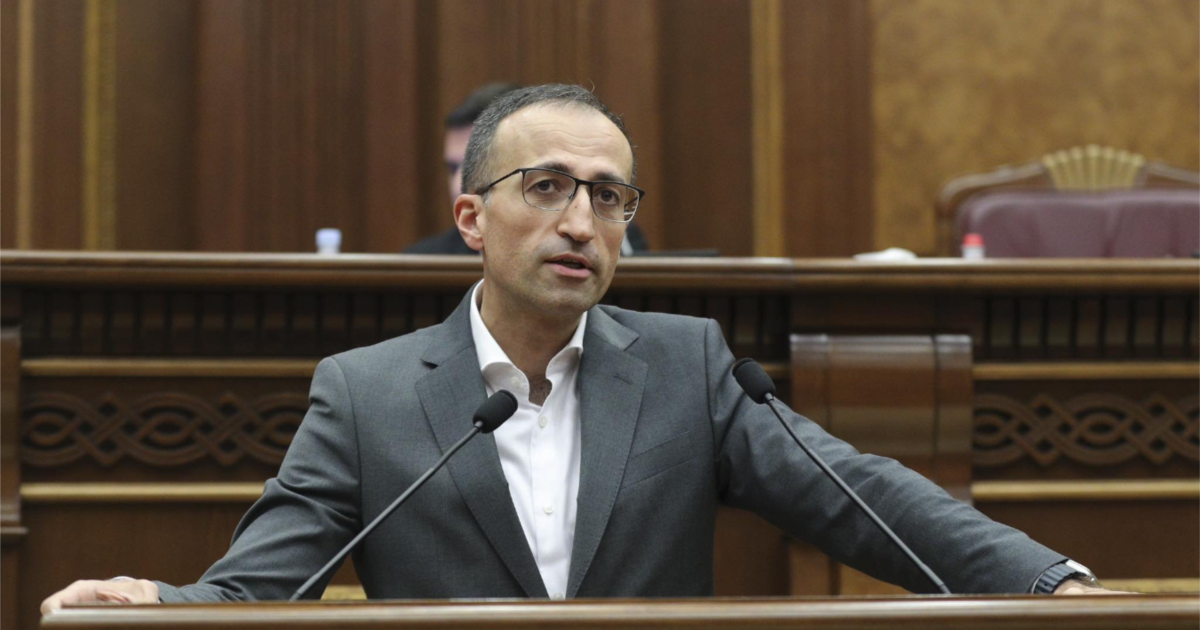
Armenian Minister of Labor and Social Affairs Arsen Torosyan announced that the government will not move forward with proposed changes to the one-time funeral benefit and that the draft law placed for public discussion will not be submitted to the National Assembly. The planned change, set to take effect in January 2027, would have limited the 200,000-dram funeral payment to households judged impoverished and redirected funds to a small increase in the minimum pension, prompting public criticism.
By Christopher Manley
861 views
Armenia's government has abandoned plans to alter the payment rules for the country's one-time funeral benefit and will not forward the draft law to Parliament, Labor and Social Affairs Minister Arsen Torosyan said in a video posted on his Facebook page. Torosyan said the decision followed public reaction to the proposal and consultations with parliamentary colleagues, including members of the ruling Civil Contract faction.
Under the proposal the government had placed for public discussion, the universal one-time funeral allowance of 200,000 drams would have been eliminated for most recipients beginning in January 2027. The benefit would have been retained only for households that met government-defined criteria for being impoverished. The draft measure also proposed using the funds freed by narrowing eligibility to raise the minimum state pension by 1,000 drams.
Torosyan told viewers that officials reviewed public feedback and held discussions with partners in the National Assembly last week before reaching the decision not to advance the legislative change. "All citizens who under current rules are entitled to receive this allowance will continue to receive it," the minister said, adding that no changes will be initiated and the draft law placed for public consultation will not be submitted to the legislature.
The draft reform had drawn sharp criticism from many citizens during the public consultation period. In interviews with Azatutyun, members of the public voiced opposition to removing the universal funeral grant, arguing the payment helps families cover immediate costs associated with a death and that narrowing eligibility would unduly burden vulnerable households.
The episode highlights tensions in social policy between targeting assistance to those in greatest need and maintaining broader, universal benefits that offer predictable support for families at moments of crisis. Proponents of targeting often argue it allows governments to concentrate limited resources on the poorest households, while critics contend that means-testing can exclude needy people who fall through administrative gaps and can be politically unpopular when it reduces benefits that are perceived as established social guarantees.
Observers say the government’s retreat demonstrates how public pressure and political consultation can shape welfare policy, particularly on measures with visible and emotive impacts like funeral grants. The ministry did not provide further details on whether it would pursue alternative measures to support pensions or other social protections, or whether it would revisit the issue after further stakeholder engagement.
The announcement came as the government sought to balance fiscal priorities and social protection objectives. While the proposed pension increase was modest — 1,000 drams — officials had framed the change as part of wider efforts to support pensioners. Opponents said the trade-off was inadequate justification for cutting a widely relied-upon benefit that addresses immediate burial and mourning expenses.
By confirming the draft law will not be transmitted to the National Assembly, the ministry has left the current funeral allowance scheme in place for the foreseeable future. The decision will be watched by advocacy groups, social policy experts and citizens concerned about the scope of Armenia’s social safety net and the government’s handling of reforms affecting vulnerable populations.
This report is based on the minister’s public statement posted on Facebook and reporting by Azatutyun, which noted the planned change and the public response it provoked.