Anatoliy Kashpirovsky, Soviet-Era Television ‘Healer,’ Dies at 87
Anatoliy Kashpirovsky, the psychotherapist who rose to fame in the late 1980s with televised 'healing sessions' watched by millions, has died at the age of 87. His death was announced by television presenter Andrey Malakhov and confirmed by RIA Novosti citing Kashpirovsky’s director.
By Clémence Desjardins
1,114 views
Anatoliy Kashpirovsky, the television personality who in the late Soviet period gained fame for televised “healing” sessions, has died at the age of 87, Russian media reported. His death was first announced by television presenter Andrey Malakhov and subsequently confirmed by RIA Novosti, which cited Kashpirovsky’s director.
Kashpirovsky became a household name in the Soviet Union in the late 1980s. In 1989, Central Television broadcast a series of his so-called health sessions in which Kashpirovsky told viewers he could influence their health remotely. The programs drew audiences in the millions and were accompanied by large in-person performances in concert halls and stadiums.
Trained as a medical doctor, Kashpirovsky was born on August 11, 1939, in the village of Stavnytsia in the Kamianets-Podilskyi region of the Ukrainian Soviet Socialist Republic, territory that is now part of Ukraine. He graduated from the Vinnytsia Medical Institute in 1962 and spent many years working as a psychotherapist at a psychiatric hospital in Vinnytsia named after academician Alexander Yushchenko. He also studied hypnosis and in 1987 served as a psychotherapist for the USSR weightlifting team. In 1988–1989 he headed the Republican Center of Psychotherapy in Kyiv.
Despite his popularity among segments of the public, Kashpirovsky’s methods were repeatedly criticized by scientists and physicians who pointed to a lack of empirical evidence supporting his claims to be able to heal or alter health outcomes remotely. His activities generated controversy over the appropriate boundaries between medical practice, media influence and public safety.
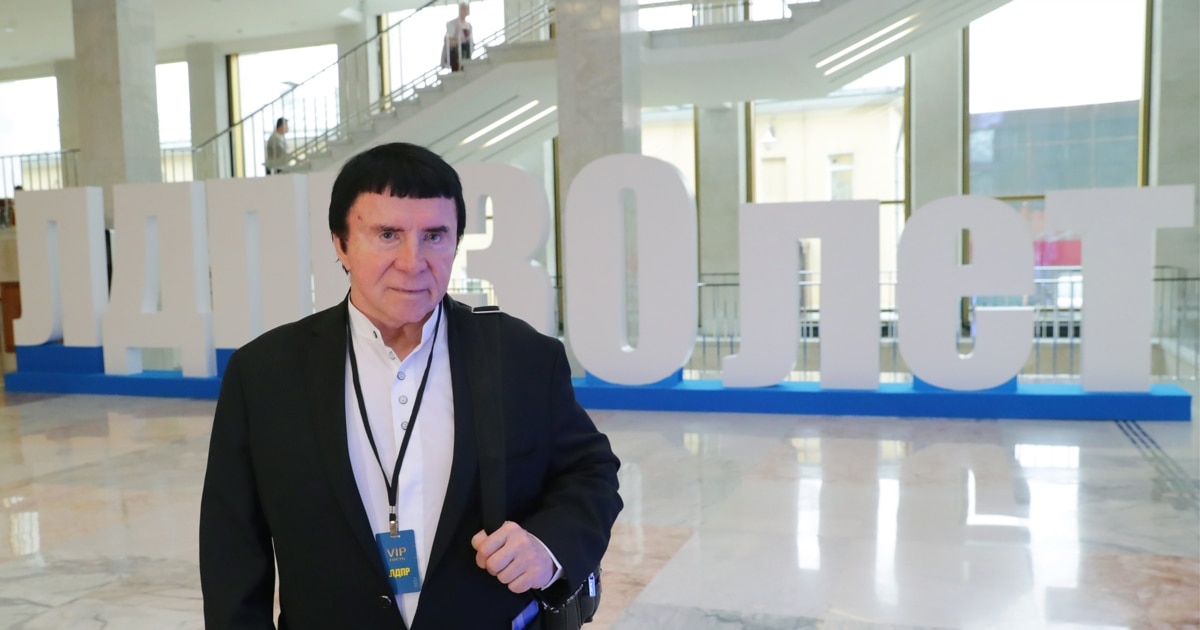
Kashpirovsky’s career also included a foray into politics. In 1993 he was elected to the first State Duma as a deputy representing the Liberal Democratic Party of Russia (LDPR). During the 1995 Budyonnovsk hostage crisis, he took part in negotiations with the militant commander Shamil Basayev and—according to contemporaneous accounts—attempted to hypnotize Basayev, an effort that did not succeed in resolving the standoff.
In the mid-1990s Kashpirovsky relocated to the United States, from where he continued to conduct sessions, largely for Russian-speaking audiences. He returned periodically to perform and tour in Russia. In 2006 he was found guilty of illegal medical activity. Years later, in 2011, he brought a lawsuit against Russian broadcaster VGTRK and the chief psychiatrist of the Ministry of Defence, Vladislav Shamrey, over statements that had alleged harm resulting from his sessions. A court initially awarded Kashpirovsky compensation, but the Moscow City Court later overturned that decision and dismissed his claim.
Kashpirovsky faced further legal scrutiny in 2015 after a deputy of the Legislative Assembly of Perm Krai, Aleksandr Telepnev, asked authorities to investigate what he described as the 'ambiguous activities' of the healer ahead of Kashpirovsky’s planned sessions in Perm. These allegations led to legal proceedings; by 2016 the court removed the accusations against him.
In later years Kashpirovsky remained active online. Since 2020 he conducted sessions on his YouTube channel, continuing to reach an audience through digital platforms. His death closes a contentious and high-profile chapter in the post-Soviet intersection of mass media, alternative medicine and law that provoked debate among medical professionals, legal authorities and the public over several decades.
The immediate circumstances and cause of Kashpirovsky’s death were not specified in reports cited by Russian media. Further details may emerge as family, representatives or authorities provide additional information.