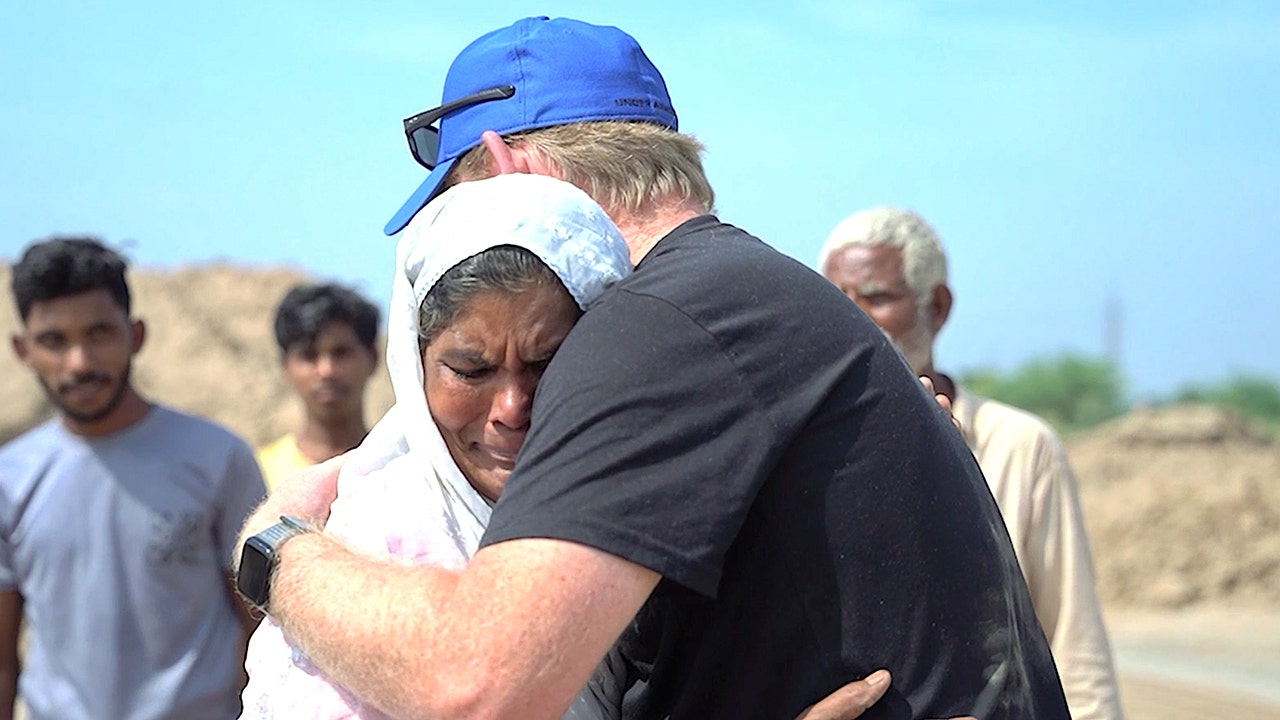
American volunteers pay off debts, free Pakistani families from bonded labor at brick kilns
American volunteers working with faith-based nonprofits have traveled to Pakistan to dismantle cycles of debt bondage at brick factories, freeing families and providing legal, educational and economic support. Experts and charity workers say the practice disproportionately affects Pakistani Christians and persists despite laws banning bonded labor.
By Beth Bailey
801 views
American volunteers and faith-based nonprofits have been traveling to Pakistan to intervene in a longstanding system of debt bondage at brick kilns that human-rights researchers and rescuers say disproportionately traps Christian families. Idaho resident Aaron Hutchings, who first visited a brick factory in Pakistan in January, told Fox News Digital he was shocked to see children turning bricks under the sun to work off debts their families had accumulated over generations. Within hours of arriving, Hutchings said he paid off the debts of two families and accompanied them away from the kiln, an action he described as breaking a "curse that they’ve had for hundreds of years."
Hutchings connected with Emmanuel Hernandez, who founded the nonprofit Project Jubilee in January 2025 after witnessing bonded labor while visiting Pakistan. Hernandez says the group has, "by the grace of God," raised donations to free hundreds of people; he told Fox News Digital that the organization has rescued about 300 Pakistanis to date. Hutchings later launched his own nonprofit, Intentional Faith Foundation, and joined Hernandez on multiple trips. Hutchings returned to Pakistan in May to help free an additional ten families and said a viral video of that trip helped prompt further donations to free more families.
Persecution researchers say the problem is extensive. Emma Hall, a researcher with Open Doors U.K. and Ireland, told Fox News Digital that there are up to one million Christians working in slave and bonded labor in Pakistan — potentially about 30% of the country's Christian population, which the 2023 census counted at 3.3 million (roughly 1.37% of Pakistan's population). Hall noted that "extreme poverty drives desperate families to accept advance loans (peshgri) for emergency and basic needs, trapping them in cycles of debt bondage where repayment systems are structured in ways that make exit extremely difficult." The U.S. Commission on International Religious Freedom has also reported recent and escalating attacks against religious minorities in Pakistan.
Project Jubilee says it does more than pay debts. Hernandez estimated the average cost to help one family at about $8,500 because the organization funds legal paperwork, provides two months' rent and food, arranges schooling for children, connects families with local ministers, and gives each family a tuk tuk — a small motorcycle taxi — to create sustainable income. Hernandez emphasized that their "goal is for them to succeed in life and make sure that they never go back." He also said Project Jubilee will rescue any bonded slave regardless of race or faith, though he added that "98% of the people we rescue are Christians, and that’s because they’re second-class citizens" in Pakistan.
Rescuers describe mixed reactions from kiln owners. In many cases, owners allow families to leave once debts are paid, albeit sometimes reluctantly. In other instances, rescuers said owners have imposed monthly caps on the number of families that can be freed or have told rescuers they are "never allowed to come back again." Rescuers also face practical barriers once families are freed: Hutchings reported difficulty finding landlords willing to rent to Christians and noted that many children are largely illiterate, requiring placement with local teachers and support groups to secure housing and jobs.
Pakistan formally outlawed bonded labor in 1992, but enforcement remains weak, according to researchers and reports cited by rescuers. Pakistan's National Commission for Human Rights released a 2023 report describing bonded labor as an alarming contemporary form of slavery affecting roughly three million Pakistanis and recommending measures including banning child labor in brick kilns, registering kilns, increasing automation, supporting labor access to justice, and encouraging brick buyers to choose safer workplaces. Representatives of the Pakistani government did not respond to Fox News Digital's questions about enforcement or the treatment of Pakistani Christians.
Those involved in the rescue efforts emphasize the transformational impact of freedom on families and communities. Hutchings described the emotional effect of watching children imagine futures other than brick-making and said the experience was life-changing for him: "Looking back, it is hard to see any of it as random. I believe God's hand was in it from the beginning, and even though we were doing all of this to show Jesus' love towards these people, we ended up receiving more than we gave." Hernandez said he committed to rescuing one family a year after seeing the conditions and has since scaled operations through Project Jubilee and partnerships with local Christian groups that help secure housing, jobs and education for freed families.
The volunteers' efforts highlight an ongoing humanitarian challenge at the intersection of poverty, weak enforcement of labor laws and religious discrimination. While debt payments can release families from immediate bondage, rescuers and human-rights groups stress that systemic reforms, stronger enforcement and broader economic opportunities will be necessary to end the practice across Pakistan. For now, small nonprofit teams and foreign volunteers continue to fund and coordinate rescues while local organizations work to integrate freed families back into communities and prevent their return to bonded labor.