Aliyev attacks EU Parliament as 'corrupt' and 'Islamophobic' amid tensions over Nagorno-Karabakh and accountability
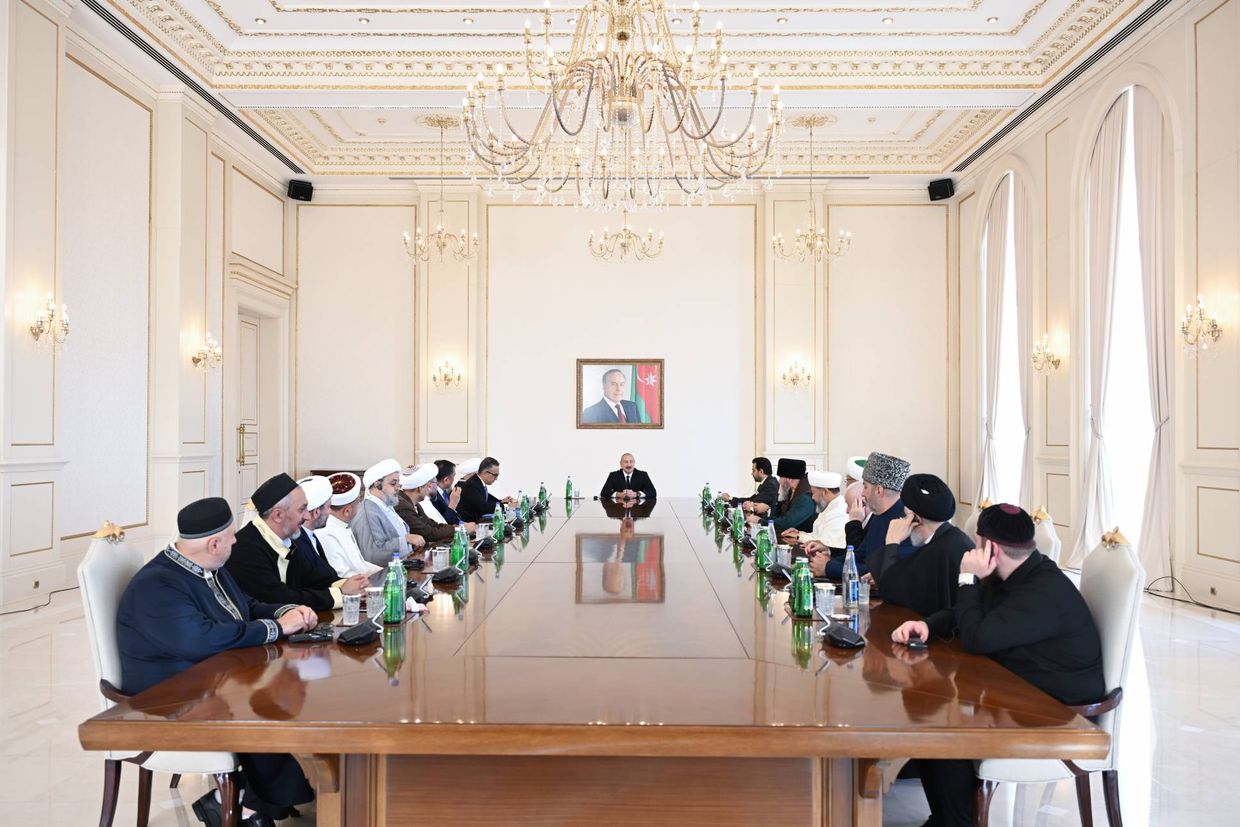
At a conference of religious leaders from the Turkic world, Azerbaijani President Ilham Aliyev denounced the European Parliament as a "nest of corrupt figures" and accused Western institutions and media of bias and Islamophobia. His remarks — delivered against the backdrop of a severed relationship with the EU Parliament and a fragile peace with Armenia — also addressed wartime destruction of cultural sites, prisoners from the Nagorno-Karabakh conflict, and past corruption scandals involving multiple states.
By Christopher Manley
1,040 views
Azerbaijani President Ilham Aliyev on Tuesday launched a broadside against the European Parliament, accusing it of being "a nest of corrupt figures," of fostering Islamophobia, and of consistently supporting Armenia. He made the remarks while speaking at a conference focused on Islam that brought together religious leaders from the Turkic world, in what observers described as a notably combative address toward Western institutions.
The speech follows a deterioration in relations between Baku and the European Parliament earlier in 2026, when Azerbaijan severed ties with the body after it adopted a multi-part resolution concerning Armenia that included clauses on Nagorno-Karabakh. Aliyev framed his comments about the parliament in the context of several corruption scandals that have roiled European institutions, referencing the Qatargate inquiry that implicated Greek MEP Eva Kaili and others, and suggesting such scandals demonstrated wider hostility toward the Islamic world.
Aliyev said the Qatargate affair was evidence of an "undeclared war [that] is being waged against our religion and against the Islamic world," and that Islamophobia was only one part of that campaign. His comments also extended to criticism of the Council of Europe and its Parliamentary Assembly (PACE), institutions that have previously investigated allegations of influence-buying and other misconduct tied to Azerbaijan and other states.
The president used part of his address to revisit the legacy of the First Nagorno-Karabakh War, accusing Armenian forces of destroying Islamic heritage sites during the conflict and calling such actions an "insult not only to us and our people, but to the entire Islamic world." He described the alleged destruction as the "true face of the Armenian state," adding that while there is now peace, Azerbaijan would not forget the atrocities it says were committed against its people.
Aliyev also discussed Armenian prisoners currently held in Azerbaijan, describing them as "separatist leaders, war criminals, and those responsible for killing children" who are "serving their sentences in Azerbaijani prisons," and calling this a triumph of justice. His categorical claim that "unlike Armenia" Azerbaijan had "never waged war against unarmed civilians" contrasted with documented findings from human rights groups and international observers that have reported evidence of serious abuses and alleged war crimes by both sides over decades of conflict.
The president further accused Western media of conducting a "dirty" campaign against Azerbaijan. Those comments echoed earlier statements from Azerbaijan’s Media Development Agency, which in September accused what it termed "Western media" of running an "organised disinformation campaign against Azerbaijan." Critics of the Azerbaijani government say such rhetoric can be used to delegitimize independent reporting and civil society voices.
Aliyev’s references to corruption scandals touched on another sensitive chapter: the so-called "Azerbaijani Laundromat" exposed in 2017, which revealed that billions of dollars were allegedly used by Baku to influence officials and shape international perceptions, including payments to members of PACE and other bodies. The parallel he drew between those revelations and Qatargate was intended to undermine the credibility of European institutions that have criticised Azerbaijan on rights and accountability grounds.
The speech arrives at a complex moment in the region. Azerbaijan and Armenia are engaged in a nascent peace process after decades of conflict over Nagorno-Karabakh, even as Baku has pursued closer energy ties with the European Union. The president’s denunciations of European institutions and Western media risk further straining relations at a time when international engagement could be critical for addressing unresolved wartime grievances, investigating allegations of rights abuses, and monitoring the treatment of prisoners.
Human rights advocates say accountability for wartime atrocities, impartial investigations, and respect for freedom of expression and independent media are essential parts of a durable peace. The clashes in rhetoric between Baku and European institutions underscore the broader challenge: efforts to normalise relations and pursue cooperation on energy and security may be complicated if mutual trust and mechanisms for accountability are not strengthened.