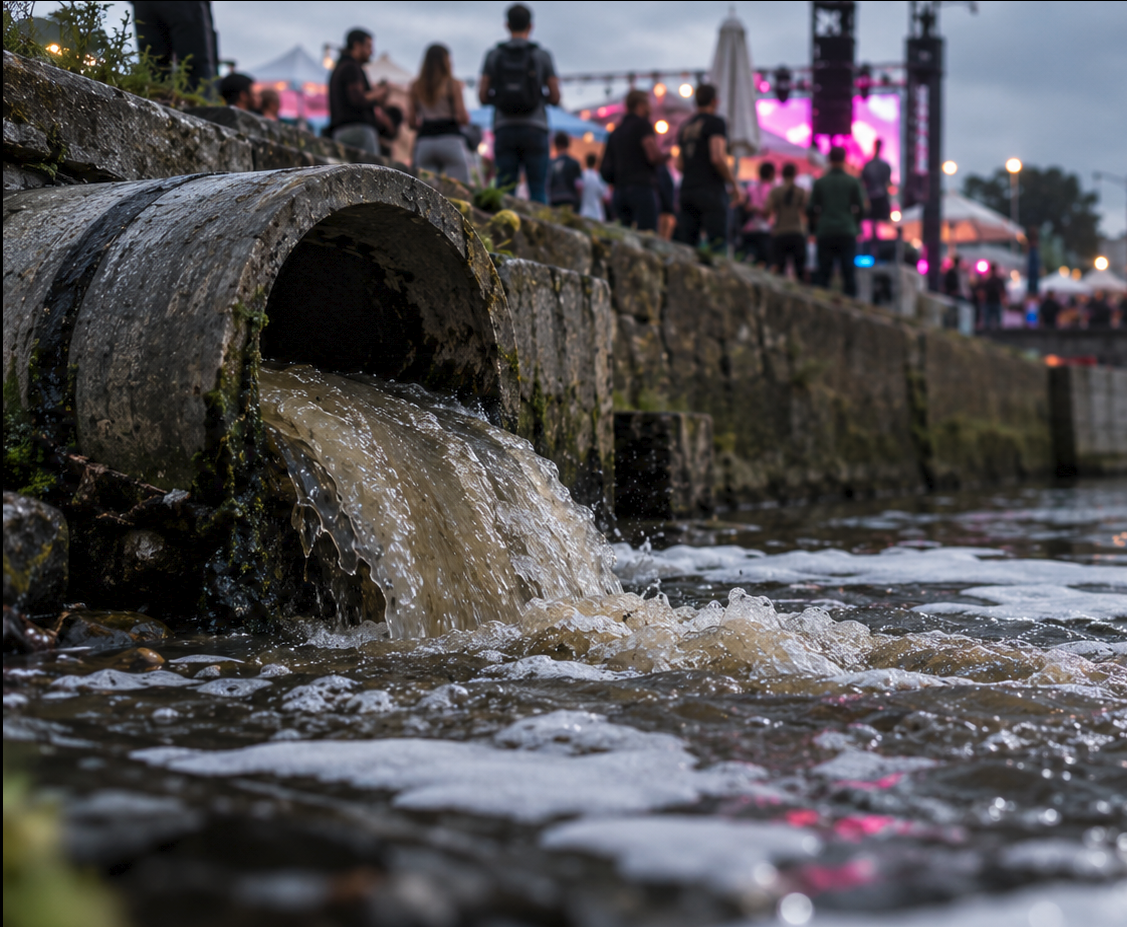
Alarming ketamine spikes in sewage during weekends and music festivals
As ketamine use surges across Europe and spikes on festival weekends, scientists warn the drug is slipping through sewage treatment into rivers, raising fears of “invisible pollution” that could harm aquatic life long before it ever threatens drinking water.
By Fiona Keating
801 views
Ketamine found in sewage and wastewater across European cities revealed a 41% surge, with the United Kingdom showing higher levels of use at 54%, according to the latest Home Office Report. Belgium topped the scores, driven by high urban mobility and nightlife locations. Germany ranked as the second-highest city in mainland Europe, while Amsterdam, Utrecht and Eindhoven came third.
The latest wastewater figures revealed a 229% increase between 2021 and 2025, representing the quickest-growing illicit substance recorded by the Wastewater Analysis for Narcotics Detection (WAND) programme. Wastewater analysis is used primarily as a tool for public health tracking, and to monitor trends in illicit drug use.
The latest data shows the largest increase in estimated consumption is for ketamine and MDMA. Ketamine consumption is now estimated have a market value of around £0.9 billion in the UK.
The most notable spikes in ketamine were recorded at weekends and entertainment hotspots. More than 75% of the cities showed higher loads of the cocaine metabolite BE and MDMA in wastewater during the weekend (Friday to Monday) than during weekdays. Around 50% of the cities showed this pattern for ketamine. More than 75 % of the 115 cities showed higher residues of cocaine and MDMA at the weekend (Friday–Monday), while almost half of them showed higher loads of ketamine. The methodology involves sampling a source of wastewater, as in sewage and measuring the levels of illicit drugs excreted through urine.
Ecology and water experts emphasise that there is little risk to drinking water supplies. Water purification processes are extremely effective at removing chemicals before water reaches our homes.
Alex LeBeaux, an exposure scientist and toxicologist, told Liberty Bulletin that while the levels of ketamine in wastewater “pose limited direct human health risks, there are concerns about potential bioaccumulation in food chains. Water companies should be more proactive in monitoring and addressing contaminants beyond regulatory requirements, though cost considerations often limit implementation of additional safety measures.”
LeBeaux expressed concern about illicit drugs like ketamine contaminating water supplies, noting that “few studies have evaluated removal efficacy for these substances. While testing for pharmaceuticals in water is not widespread, it’s important for utilities to understand potential risks to public health.”
Professor Alistair Boxall, from the University of York, also suggested that the “concentrations of chemicals are really low and very unlikely to cause health impacts in the short term.”
But some environmental scientists say more research needs to be done on how ketamine affects aquatic ecosystems and fish in areas of high concentration.
In the UK, the River Medway catchment area fell short of the environmental standards set by the Environment Agency (EA). The highest concentrations of ketamine in all of the UK were found here.
The primary warning issued by scientists following these disclosures is the threat of “invisible pollution.” Even when concentrations are technically low, the long-term exposure of aquatic wildlife to an increasing mixture of prescription pharmaceuticals, pesticides, and illicit drugs impacts on river biodiversity.
According to Professor Francis Hassard of Cranfield University, “laboratory studies have found changes in fish behaviour, feeding, development and tissue health, including at concentrations reported in some contaminated waters. That warrants attention, although it doesn’t establish the extent of damage to fish populations in UK rivers.”
A report by Watershed Investigations found that traditional wastewater treatment plants are not engineered to filter out complex micropollutants. When people consume ketamine, it is excreted, enters the sewage system, and goes through treatment facilities almost unaltered. It is then discharged into rivers and waterways.
Professor Hassard told Liberty Bulletin that sewage treatment plant removal is “variable and often incomplete. Conventional sewage treatment wasn’t designed specifically to remove drugs such as ketamine, so some ketamine and its breakdown products can pass through into treated effluent.
“If more enters sewers and treatment performance stays unchanged, more can reach rivers. The concern is prolonged exposure alongside other pollutants. Actual risk depends on concentrations, river dilution and exposure duration.”
Dr John Wilkinson from York University, argues that sewage spills into rivers are “a real worry because there’s a lot more of the chemicals and a lot more of the pathogens coexisting in untreated sewage”, while adding “they’re found in treated sewage too”.
In September 2026, South West Water in the UK, pleaded guilty for illegal discharge activities over a period of six years, including sewage discharges and failing to take measures following a failure at a sewage pumping station. The company was fined nearly £8m, with the judge describing the pollution as “horrendous”.
A study revealing the widespread presence of illicit drugs found in Northern Ireland’s waterways, was a cause for concern, according to Professor Leon Barron at Imperial College London, who collaborated in the research. He warned against complacency. “There are so many more chemical types used every day and we should consider expanding our scope to include them. Importantly, we have demonstrated that we can use these powerful tests quickly and at large scale to catch pollution early".
Increased use of Special K
Historically, ketamine’s legal use is as a medical and veterinary anaesthetic, previously used during the Vietnam War. It has also been used to treat depression, chronic pain, and anxiety. But in recent years the drug has grown in popularity as an illicit party and club drug. Ketamine offers a lower price point compared to other drugs such as cocaine. Powdered ketamine can be snorted or rolled into joints. Ketamine has also been used as a so-called date-rape drug as it is odourless and tasteless.
While pharmaceutical ketamine is legally manufactured, much of the illicit supply of the drug is siphoned off and sold on the black market from sources such as veterinary clinics and medical supply chains during transit. A BBC report on European smuggling networks revealed how tons of legal pharmaceutical ketamine disappear into the black market while moving between customs points.
Known by various street names — K, vitamin K, special K, and cat tranquiliser, ketamine produces an altered state, hallucinations, euphoria, distorted perceptions of sight and sound. Mixed with alcohol it can cause increased blood pressure, depresses the respiratory system and can be fatal.
Regular heavy use can result in ketamine-associated cystitis ("ketamine bladder")—a painful condition with severe incontinence, blood in urine and bladder ulcers. The UK's first specialist youth clinic for ketamine-induced uropathy (KIU) saw a rise in cases among children in the 13–15-year age group, with young girls making up around 67% of all patient referrals.