Al Jazeera and Analysts Say US-Israeli Campaign Is ‘Working’ as Israeli Strikes Reportedly Kill Basij Commanders and Target Iranian Security Official
Regional reporting and analysts say a US-Israeli campaign has systematically degraded key Iranian military and intelligence capabilities, even as maritime operations in the Strait of Hormuz appear to continue. Overnight strikes reportedly killed senior Basij commanders at a desert meeting and targeted Ali Larijani, while Tehran and Israeli authorities offered conflicting accounts of Larijani’s fate.
By Joe Hoft
961 views
Regional media and analysts are increasingly framing recent operations against Iran as a coordinated US-Israeli campaign that is inflicting sustained damage on Tehran’s security and military infrastructure. Al Jazeera, a Doha-based outlet that has often taken positions critical of the United States and Israel, ran a headline asserting “The US-Israeli strategy against Iran is working,” a characterization echoed by academics and commentators assessing the strikes and their broader effects.
One of the analysts cited in social media commentary, Professor Muhanad Seloom, argued that the campaign’s effects can be seen across Iran’s principal instruments of power. “When you look at what has actually happened to Iran’s principal instruments of power – its ballistic missile arsenal, its nuclear infrastructure, its air defences, its navy and its proxy command architecture – the picture is not one of US failure. It is one of systematic, phased degradation of a threat that previous administrations allowed to grow for four decades,” he wrote. Seloom, who described having worked for the US Department of State and advised defence and intelligence agencies, added that what he observed resembled “a recognisable military operation proceeding through identifiable phases against an adversary whose capacity to project power is collapsing in real time.”
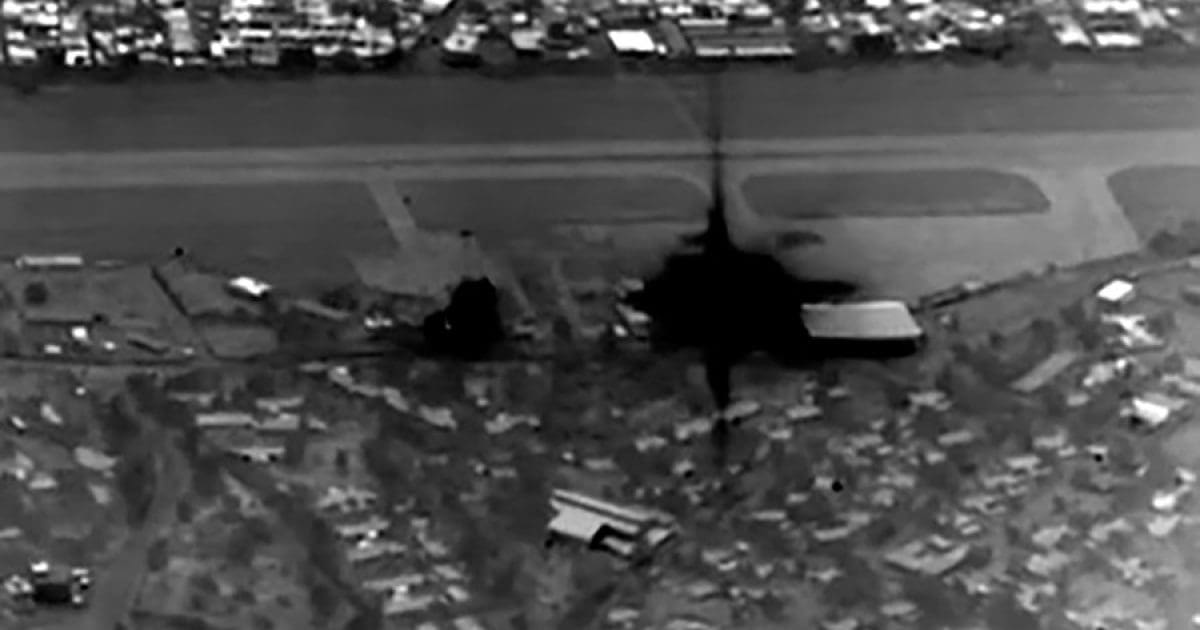
Overnight reporting said Israeli forces struck a makeshift desert meeting where senior commanders of the Basij, the Iranian paramilitary internal-security force, had gathered. The Israeli Defence Forces (IDF) reportedly confirmed a precision strike on a tent complex where Basij commander Gholamreza Soleimani and dozens of regional commanders had been meeting. The report said Soleimani and his deputy were killed, along with regional commanders who ran Iran’s internal repression apparatus. The account said Israeli intelligence had detailed knowledge of the location, timing and attendee list.
Separately, Israeli officials said Ali Larijani, secretary of Iran’s Supreme National Security Council, was targeted in strikes on Tehran. Defense Minister Katz is quoted as saying this morning that Larijani and the Basij commander “were eliminated overnight and joined Khamenei and all the eliminated members of the axis of evil, in the depths of hell.” Iran published a handwritten note claiming that Larijani survived the attack, and the IDF said it was still assessing the status of some targets.
Reports and analysts described the operations as the product of long-term intelligence investment and real-time targeting. The reporting credits Mossad’s decades-long human networks inside Iran as a foundational element, coupled with social media tip-offs from Iranian citizens that allegedly identified Basij checkpoint locations, commander movements and meeting schedules. According to those accounts, the combination of long-term covert sources and timely open-source indicators created a targeting overlay that diminished Tehran’s ability to conceal key personnel movements.
The strikes were said to have used F-35 stealth aircraft to deliver stand-off precision munitions against command nodes linked to Iran’s Intelligence Ministry and Basij, internal security forces in Shiraz, and air-defence systems in Tabriz. Observers noted that critical oil infrastructure was not struck. Israeli Prime Minister Benjamin Netanyahu released a photograph purporting to show the moment he authorized the strikes, a symbolic signal to remaining commanders that their movements were monitored; hours later he addressed the Iranian people for Nowruz, wishing them “a year of freedom.”
Despite what analysts called an unprecedented degradation of Tehran’s intelligence and security apparatus, the operational systems governing transit through the Strait of Hormuz appeared to continue functioning after the strikes. MarineTraffic and other regional data cited in analysis indicated that Hormozgan provincial IRGC naval units continued using the same VHF hail, AIS verification and diplomatic clearance protocols they had been operating for days. Commentators described a distinction between decapitation of senior leadership and the persistence of standing operational procedures: the 31 provincial commands that manage passage do not depend on individual names so long as sealed contingency packets, theater lead authorities and standing orders remain intact.
Those same analysts warned of consequential global economic effects if the tolling regime were to be disrupted. One analysis cited that 21 ships carrying nearly one million metric tons of fertilizer remained stranded in the Gulf and that urea prices in New Orleans rose to $683 per metric ton, noting the Gulf region produces about 49 percent of global urea exports. The analyst suggested that documented disruption of Hormuz passage within 72 hours of the strikes would be required to indicate that the command confusion had broken the tolling system.
Commentary in the original report also linked the operations to a broader political narrative. The piece noted that the fact Al Jazeera ran coverage acknowledging the campaign’s effectiveness could indicate that Qatar, the network’s home country, perceives the US-Israeli effort as likely to succeed. The article closed with an argument about domestic security in the United States, asserting that individuals it described as “sleeper cells” permitted entry into the country posed the greater threat and arguing for more aggressive immigration enforcement—an explicit political stance presented as the author’s perspective rather than independent verification.
At the time of publication, several claims remained contested: Iranian authorities disputed some accounts, officials on both sides had not publicly confirmed all details, and independent verification of casualties and specific targeting remained limited. The evolving situation underscores both the intensity of the campaign described by Israeli and Western analysts and the serious geopolitical and economic implications should operations escalate or trigger broader disruptions in regional maritime traffic.