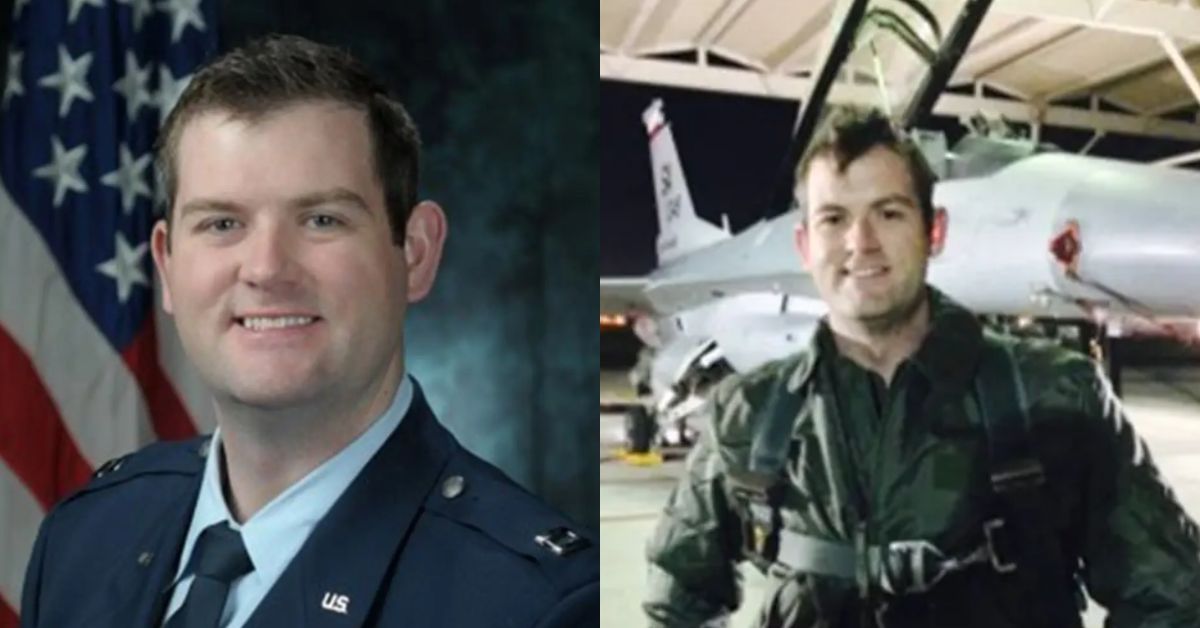
Air Force Veteran Who Said He Would Testify on Alleged UFO Crash Retrieval Programs Found Dead; Autopsy Cites Accidental Overdose
Matthew James Sullivan, a decorated 39-year-old Air Force veteran who had agreed to testify before Congress about purported long-running government crash retrieval programs involving non-human craft, was found dead at his Falls Church, Virginia home on May 12, 2024. The Northern Virginia medical examiner ruled his death an accidental overdose from a combination of alcohol and prescription drugs, a development that has prompted renewed scrutiny amid a series of deaths and disappearances of researchers linked to classified aerospace and UAP-related work.
By Cassandra MacDonald
951 views
Matthew James Sullivan, a 39-year-old former Air Force intelligence specialist who had told lawmakers he would testify before Congress about alleged long-running U.S. government crash retrieval and reverse-engineering programs, was found dead at his Falls Church, Virginia home on May 12, 2024. The Northern Virginia District Office of the Chief Medical Examiner determined his death was an accidental overdose caused by a combination of alcohol, alprazolam (the generic form of Xanax), cyclobenzaprine and imipramine.
Sullivan, described in news reports as highly decorated and holding top-secret clearances, had been preparing to appear at congressional hearings scheduled for November 2024. Reporting in the New York Post, cited in public accounts of the case, said Sullivan had prepared to disclose firsthand knowledge of what have been characterized as the U.S. government’s “legacy” crash retrieval programs involving non-human craft and “biologics.” Sullivan’s résumé, as reported, included work in sensitive roles with the Air Force Intelligence Agency, the National Air and Space Intelligence Center (NASIC) and the National Security Agency (NSA).
Former military colleagues and proponents of broader disclosure of UAP-related information have responded to Sullivan’s death with concern. Retired Air Force Maj. Gen. David Abba, who spoke at Sullivan’s funeral, described him as carrying “the burden that a select few in this nation have of truly understanding what’s going on.” Supporters argued that Sullivan’s planned testimony would have added credibility to other whistleblower accounts, including those by former intelligence official David Grusch, who has publicly asserted that the U.S. possesses non-human “biologics.”
Sullivan’s death has also prompted political inquiries. Republican Representative Eric Burlison wrote in a letter dated April 16 to FBI Director Kash Patel that “Mr. Sullivan’s death was a local Virginia medical examiner case, and the manner and circumstances of his death raise substantial questions, as he was preparing to provide testimony to Congress… The sudden and suspicious circumstances surrounding his death raise significant concerns about potential foul play and the safety of other individuals involved in this matter.” The precise context and timing referenced by Burlison reflect concern among some lawmakers about the broader pattern of deaths and disappearances among individuals linked to classified programs.
The FBI has confirmed it is “spearheading the effort to look for connections into the missing and deceased scientists” and said it is working with the Departments of Energy and Defense as well as state and local law enforcement agencies. Officials have not provided public findings tying Sullivan’s death to any external activity beyond the medical examiner’s ruling.
Public reporting has placed Sullivan’s death within an expanding list of deaths and disappearances that has attracted media and congressional attention. The list, as compiled in recent reporting, includes the disappearance of Air Force Maj. Gen. William “Neil” McCasland from his Albuquerque, New Mexico home on February 27, 2026; the 2025 vanishings of Melissa Casias and Anthony Chavez, both linked to Los Alamos National Laboratory; the August 2025 disappearance of Steven Garcia, who worked in security for non-nuclear weapon components; the June 2025 disappearance of aerospace engineer Monica Jacinto Reza; the 2024 death of NASA Jet Propulsion Laboratory engineer Frank Maiwald; the December 2025 shooting death of MIT physicist Nuno Loureiro; the February 2026 killing of Caltech exoplanet researcher Carl Grillmair; and the March 2026 death of Novartis chemical biology team leader Jason Thomas. Reporting has also revisited earlier cases such as the 2022 death of Amy Eskridge, an aerospace researcher and founder of The Institute for Exotic Science, whose death was originally ruled a suicide and which some sources say is being re-examined.
Amy Eskridge’s case, as reported in media coverage cited alongside other incidents, drew attention for statements she made before her death expressing fear that threats had escalated and that she needed to go public with her research for safety. In a 2020 interview quoted in subsequent reporting, Eskridge said, “I need to disclose soon, man. I need to publish soon because it’s like escalating. It’s getting more and more aggressive,” and described invasive conduct and threats. She also reportedly wrote to a friend in May 2022, “If you see any report that I killed myself, I most definitely did not. If you see any report that I overdosed, I most definitely did not. If you see any report that I killed anyone else, I most definitely did not.” Eskridge allegedly warned associates that going public with her work was safer than keeping it private, saying, “If you stick your neck out in private… they will bury you, they will burn down your house while you’re sleeping in your bed and it won’t even make the news.”
Coverage of these cases has included the recent death of prominent UFO researcher and media personality David Wilcock, who was found dead outside his home in Boulder County, Colorado. News reports stated that no foul play has been alleged by authorities in Wilcock’s case and the investigation remained with the coroner; two days before his death Wilcock had posted comments expressing concern about a pattern of disappearances, saying, “I’m excited to be here, you know, every day that I have on earth is a gift and a blessing, and I’m very grateful for that, because frankly, people are disappearing. Scientists are going missing,” he said. “It’s a little bit scary.”
At this stage, the only official public determination regarding Sullivan’s death is the Northern Virginia medical examiner’s ruling of an accidental overdose. Federal authorities have indicated they are coordinating to examine possible links among multiple cases, while lawmakers and others continue to call for clarity and full transparency about both classified programs and the circumstances surrounding these deaths and disappearances.
Contact details and follow-up reporting in the source piece identified additional names and timelines compiled from public reporting. Investigations into individual cases remain with local coroners and law enforcement agencies unless otherwise stated by authorities.