Acting Kosovo Interior Minister Given One-Year Suspended Sentence for Throwing Tear Gas into Parliament
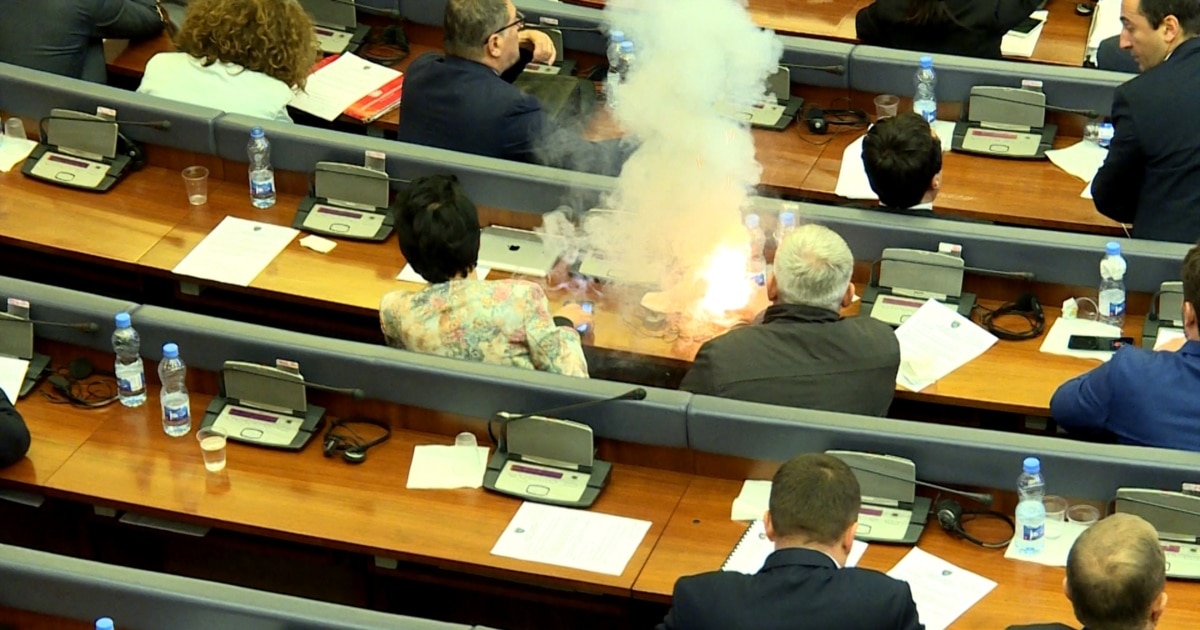
Kosovo's acting interior minister, Dželal Svečalja (Xhelal Sveçla) of the Self-Determination Movement, was sentenced on 8 September to one year of conditional imprisonment after a court found him guilty of deploying tear gas inside the Assembly during a volatile 21 March 2018 session on the Montenegro border demarcation. Prosecutors said Svečalja activated a gas canister and threw it into the parliamentary chamber several times without warning; the prosecution had asked for a two-year prison term and a €3,000 fine.
By Blake Marriott
917 views
A Pristina court on 8 September handed Kosovo’s acting interior minister, Dželal Svečalja (also given as Xhelal Sveçla), a one-year suspended prison sentence after finding him guilty of using a weapon or dangerous object by throwing tear gas into the Parliament of Kosovo. The conviction stems from an incident on 21 March 2018, when lawmakers were holding a plenary session to ratify an agreement on the demarcation of the border with Montenegro.
Svečalja, a member of Pokret Samoopredeljenje (the Self-Determination Movement), was declared guilty on 2 September of activating and throwing a canister of tear gas into the parliamentary chamber on the day of the ratification vote. The amended indictment submitted by prosecutors charged him specifically with use of tear gas during the extraordinary parliamentary session. According to the prosecution, he activated the gas canister and threw it into the hall several times without warning, preventing those present from safely leaving the room.
The sentencing on 8 September imposed a conditional one-year prison term, to be enforced if Svečalja violates the terms of his probation. Details about the length of the probation period and any ancillary restrictions were not specified in the reporting. Svečalja was not present in court at the session in which the guilty verdict was recorded on 2 September.
During earlier proceedings before the Basic Court in Pristina, Svečalja had denied the charges. On 10 April he formally pleaded not guilty to the indictment. Prosecutors, however, urged a stiffer punishment: at a separate hearing on sentencing, prosecutor Valdrin Krasnići proposed a custodial sentence of two years and a fine of €3,000, according to the media watchdog Betimi për Drejtësi.
The conviction adds to a history of confrontational parliamentary tactics in Kosovo involving tear gas. Lawmakers have at times used or threatened to use gas canisters as a form of protest against sensitive political agreements. The practice dates back to at least 2015, when deputies opposing a normalization agreement with Serbia reportedly introduced tear gas into the plenary chamber. Political groups later identified in reporting as the Alliance and the Social Democratic Initiative also took part in protests that involved gas being used in the Assembly during debates over the border demarcation with Montenegro.
Notably, a separate case related to an August 2016 tear gas incident in the Assembly resulted recently in the acquittal of Glauk Konjufca, who has served as acting foreign minister. That decision underscores the uneven outcomes in prosecutions arising from parliamentary disturbances and highlights the broader legal and political debates in Kosovo over how to address violent or dangerous conduct by elected officials.
The conviction of an acting interior minister for deploying tear gas inside the national legislature raises immediate questions about accountability within Kosovo’s government and about the maintenance of safety and order in democratic institutions. The March 2018 incident occurred against the backdrop of contentious negotiations and public opposition to border and normalization agreements with neighboring states, tensions that have periodically spilled into parliamentary chambers. How the sentence—and any potential appeals—affect Svečalja’s official duties and his party’s standing remain matters of public and political interest as Kosovo continues to grapple with the fallout from these polarizing issues.