A Long Road to Justice: Ukraine’s Torture Survivors Seek Reparations
As Ukraine's torture and sexual-violence survivors seek accountability for crimes in Russian captivity, survivors and legal experts argue that criminal trials alone are not enough, and that reparations and recognition remain a long, unfinished road.
By Albina Kastrati
868 views
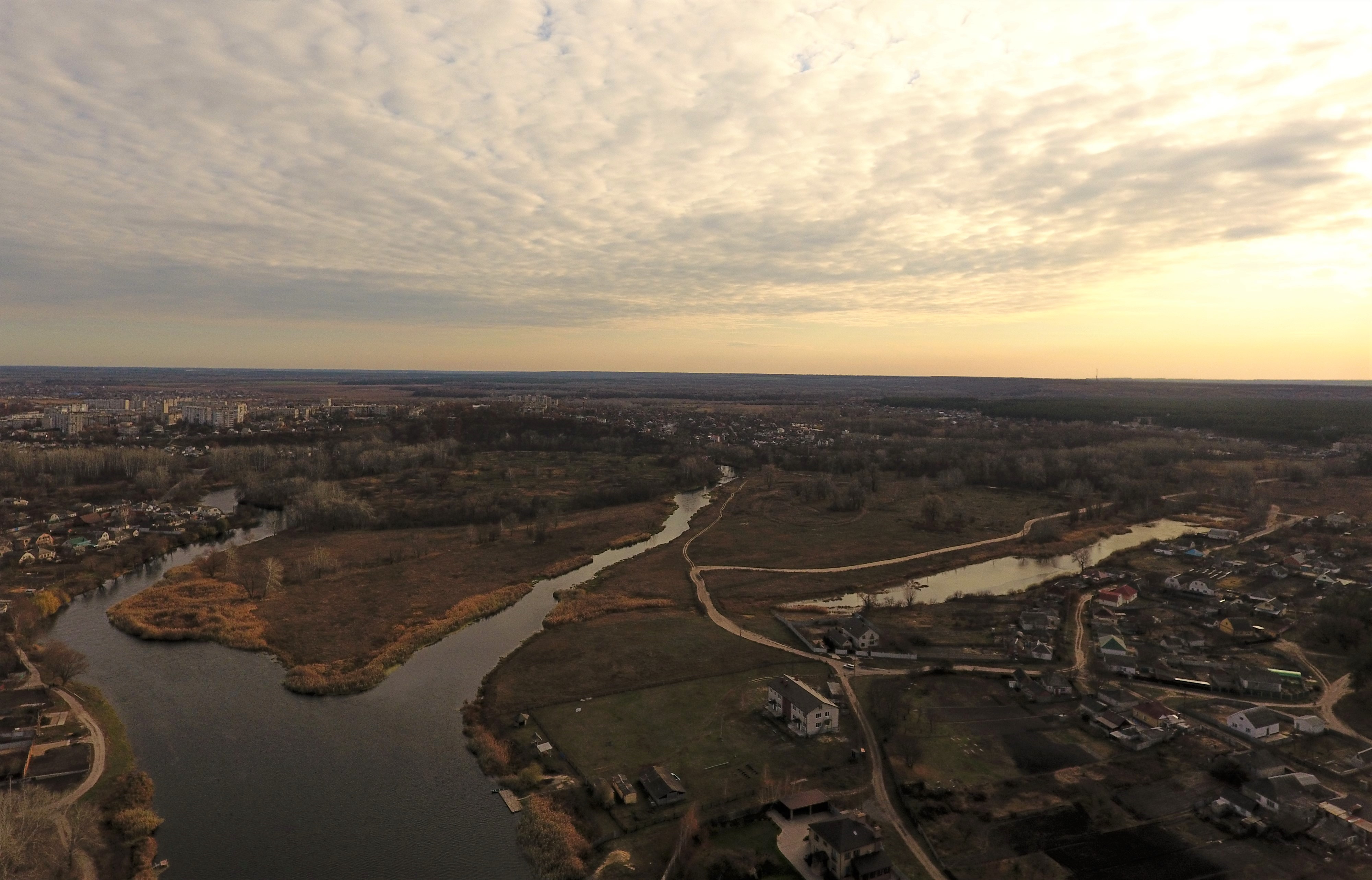
Photo: Andr Datskiy / Wikimedia Commons
It has been a little over four years since the full-scale Russian invasion of Ukraine, which began on 24 February 2022. But prior to the full-scale invasion, Ukraine and Russia had been engaged in an armed conflict since 2014.
Throughout the conflict, Russia has been accused of committing numerous acts that have resulted in widespread human rights violations affecting both civilians and combatants. According to OHCHR, 15,172 civilians have been killed and over 40,000 injured since Russia launched its full-scale invasion of Ukraine in February 2022, meanwhile The International Committee of the Red Cross reported in February 2024 that it was seeking to clarify the fate of 23,000 people whose families had no news of them.
Beyond these figures, multiple international organizations have documented allegations of torture and other human rights violations against civilians held by Russian forces. Testimonies from former detainees describe a range of methods used during captivity.
In an interview conducted with O.B., 57, with translation assistance from a field researcher with Truth Hounds, he described being held in a small cell with several other detainees. He said that, at one point, the lack of water became so severe that he drank his own urine in order to survive.
O.B. said that Russian soldiers arrived at his home in May 2022 accompanied by two local residents who accused him of helping the Ukrainian military. He said the soldiers detained him and tied his hands. According to the translation, first he was taken to the nearby village, where he experienced what he described as a mock execution.
“... after Doslidne those leading, they took him in the car, knocked him out, and he woke up in Balakliia in a pit, where he spent two weeks there with no food, beating him and imitating the execution,” he said through translation assistance provided by Truth Hounds.
O.B. said he expected harsher treatment because he was detained due to the nature of his work.
“He understood that he could not speak about anything, because if he gave information, he would be killed. That’s how he tried to handle the situation…During the beatings, you have an adrenaline rush and you do not feel the pain. The real pain comes the day after… They just give you a day to feel the consequences, and then it happens again,” the 57 year old added.
OHCHR’s September 2025 report documented 508 cases involving civilian detainees: 392 men, 103 women, three girls and nine boys. In 216 of those cases, OHCHR interviewed detainees after their release and obtained first-hand accounts.
The same report says Ukrainian authorities reported around 1,800 Ukrainian civilians still detained by Russia in occupied territory in May 2025, while OHCHR considered the actual number likely to be significantly higher.
Viacheslav Borodavka, a mathematics and computer science teacher at Vovchansko-Khutirskyi Lyceum, was also detained by Russian forces in June 2022.
Following the full-scale invasion in February 2022, Borodavka said through an interpreter provided by Truth Hounds that the Russian authorities actively sought to collaborate with Ukrainian teachers, succeeding with most of them.
“It was very saddening to see that about 80% of the teachers at his school who were teaching kids about patriotism, about Ukraine as a sovereign state, ended up collaborating with the occupiers.. the occupiers administration at first reassured that the kids would be receiving the Ukrainian graduation certificate from school, but then they changed their mind, and that they would only issue the Russian ones,” said the 52-year-old teacher through translation assistance provided by Truth Hounds.
As the head of the local union, Borodavka attended a meeting of school directors and administrators on 19 June 2022, where he again expressed his pro-Ukrainian position. The following day, the 52-year-old teacher was detained.
“They searched his house, then they put a bag on his head, tied his arms, and took him to the local torture chamber... The cell was around 25 square meters. It contained from 20 to 40 people, depending on the day. He remembered a 16-year-old boy that was detained, and up to 80 years old, so they were detaining people for everything, for every little misdemeanor... Women and men were taken separately. Women's cell was one floor below, but also the torture chamber and the interrogation room, they were just near the cell, so they could sometimes see women come into the interrogation room, and also they could hear everything that was happening in that room,” said the 52-year-old.
Borodavka said sounds from the torture chamber could be heard clearly from his cell. He declined to discuss what he heard in detail.
After his release, Borodavka resigned from his teaching position. However, he continued attending meetings with directors of other schools. At one such meeting, he said he learned that teachers working with the Russian occupation authorities were receiving salaries from them. Borodavka again expressed his position, urging that when the new school year began in September, schools should return to teaching the Ukrainian curriculum.
He was detained again on 16 July. According to his account, he was interrogated much more harshly than during his first detention.
“They searched his house again. They took all his gadgets, his laptop, and also his wife's smartphone and while they were taking him to the cell again, they said that they would shoot and bury him into the ground…it was much worse than before, this time he was in the cell for two weeks, and he understood that it was to make him an example...the directors who were leading this collaboration they told others that it’d better collaborate because if not, they’d end up like Viacheslav, and hearing that a lot of teachers that were pro-Ukrainian, they just tried their best to leave abroad.”, explained further the teacher.
After his second release, Borodavka intended to follow the example of his pro-Ukrainian colleagues and leave Vovchansk. However, during the first week of September, he was told to stop checking in because it was believed the Ukrainian counteroffensive would reach the area soon. On 10 September 2022, the town was liberated.
According to Borodavka, many teachers who had collaborated with the Russian occupation authorities fled the area, while others relocated to Kharkiv and were later employed at other schools.
Kateryna Busol, legal adviser at the International Center for Transitional Justice, said a holistic approach to transitional justice is essential in responding to crimes committed during armed conflict, given the unique circumstances in which they occur.
According to Busol, such an approach should incorporate key principles of conflict-related justice, including gender competence, intersectionality, disability awareness, and the best interests of the child.
“So far, we see these core principles of justice for international crimes are being used very incoherently in Ukraine, depending on respective stakeholders' understanding of, say, gender competence, they are implemented, but there should be a more unified statewide definition... I think a holistic policy would clearly state that there are other measures of justice which are not just desirable but are required in the context of an armed conflict and mass atrocities, because criminal trials, given the massivity of criminality, will not be able to address everything,” Busol said.
A holistic approach to transitional justice would also recognize that torture in detention, conflict-related sexual violence, and other international crimes have been occurring since 2014.
According to a July 2025 communication by UN Human Rights Council special procedures mandate holders, as of 20 March 2025, there were reportedly 150,000 cases of torture known to Ukraine’s Office of the Prosecutor General. Approximately 5,000 criminal proceedings had been opened in Ukraine based on allegations of torture, with 300 suspects reportedly identified and 80 convicted, some in absentia. As of 31 March 2025, the Prosecutor General’s Office had indicted nine Russian Federation servicemen in connection with 26 cases of sexualized torture.
Alisa Kovalenko, a Ukrainian documentary filmmaker, human rights activist, and board member of SEMA Ukraine, is a survivor of conflict-related sexual violence in captivity. She shared her experience in 2016 and has since worked to raise awareness of CRSV and support survivors. According to Kovalenko, many survivors do not realize they have experienced sexualized torture or other forms of sexual violence until they are approached in a trauma-informed and sensitive manner.
“We spoke with communities there who were under occupation, and they witnessed also some of cases of CRSV... because many people think that it's only rape, we managed to identify 10 survivors, women who didn't think they survived CRSV because they were not raped, but they survived sexualized torture, and they thought it's just torture, they didn't know that it's separate, it's a war crime, like it's just variation of torture,” Kovalenko said.
Alisa, in her work as an activist, emphasises that even small wins are small wins, and that although the chances of a perpetrator who sexually abused a victim being brought to justice are low, it is still important for cases to be documented.
“I thought that maybe at least my case can shine some light…maybe nobody can guarantee you that this guy will be fined, or this group of Russian soldiers will be fined…we can bring them to trial, but even testimony in this, it's a step (forward) to justice, because it's not only individual what we survived, but it's something as a collective,” said further Alisa.
One of the messages that the activist, together with the rest of the SEMA group, try to convey is the stigma around conflict-related sexual violence (CRSV), as survivors are still met with a lack of support not only by appropriate institutions but also by society.
“I heard about the case of a woman in a village in the Kherson region who asked Russian soldiers for bread and was then gang-raped. Some of her neighbors thought that it was her fault, (because) she asked for bread, and then she committed suicide” -- and as for institutional support -- “The governmental institutions became more engaged, but there was no financial support. We never had this kind of support from the government. They started to involve us as equals — as speakers, experts, and partners. Survivors became experts recognized by the state, and this is a significant achievement.”
OHCHR documented 1,004 cases of sexual violence between 24 February 2022 and 31 July 2026, with 89 percent attributed to Russian Federation authorities.
In May 2026, the International Center for Transitional Justice (ICTJ) published a report by legal adviser Kateryna Busol arguing that Ukraine should revive efforts to establish a comprehensive transitional justice framework. The report says such a framework should address criminal accountability alongside reparations, truth-seeking, institutional reform, memorialization and guarantees of non-repetition. It also argues that Ukraine’s justice efforts should recognize Russia’s aggression as having begun in 2014 and ensure that survivors from Crimea and Donbas are equally entitled to redress.
According to Kateryna Busol, Ukraine still has significant work to do on reparations for survivors.
“For urgent interim reparations for survivors of sexual violence, Ukraine has received generous support from the EU and certain individual governments, but that was done with a view of showing the success of the pilot project…so that with this pilot, Ukraine expands the program and ensures its more holistic, sustainable funding. Ukraine, so far, has hasn't done that…I understand the government, on the one part, because there are competing priorities, which require the funding of the military, of the doctors, the teachers, civil servants, but I think there are ways to ensure the sustainable commitment to reparations here and now… Ukraine as a government, our civil society, should make a case for allocating part of that loan transparently,” added Busol.
Despite the ongoing war that brought many losses on different levels, the Ukrainian spirit still resists, even during the colder seasons.
“We didn’t even have gas, there was no electricity, no water…was very cold, and it was the case for many other Ukrainians, but at the same time you could feel the spirit of resilience, resistance,... people were gathering and then throwing rave parties just to warm up themselves or like how some younger people started to help older elder people who were cold in the apartments,” concluded Alisa.