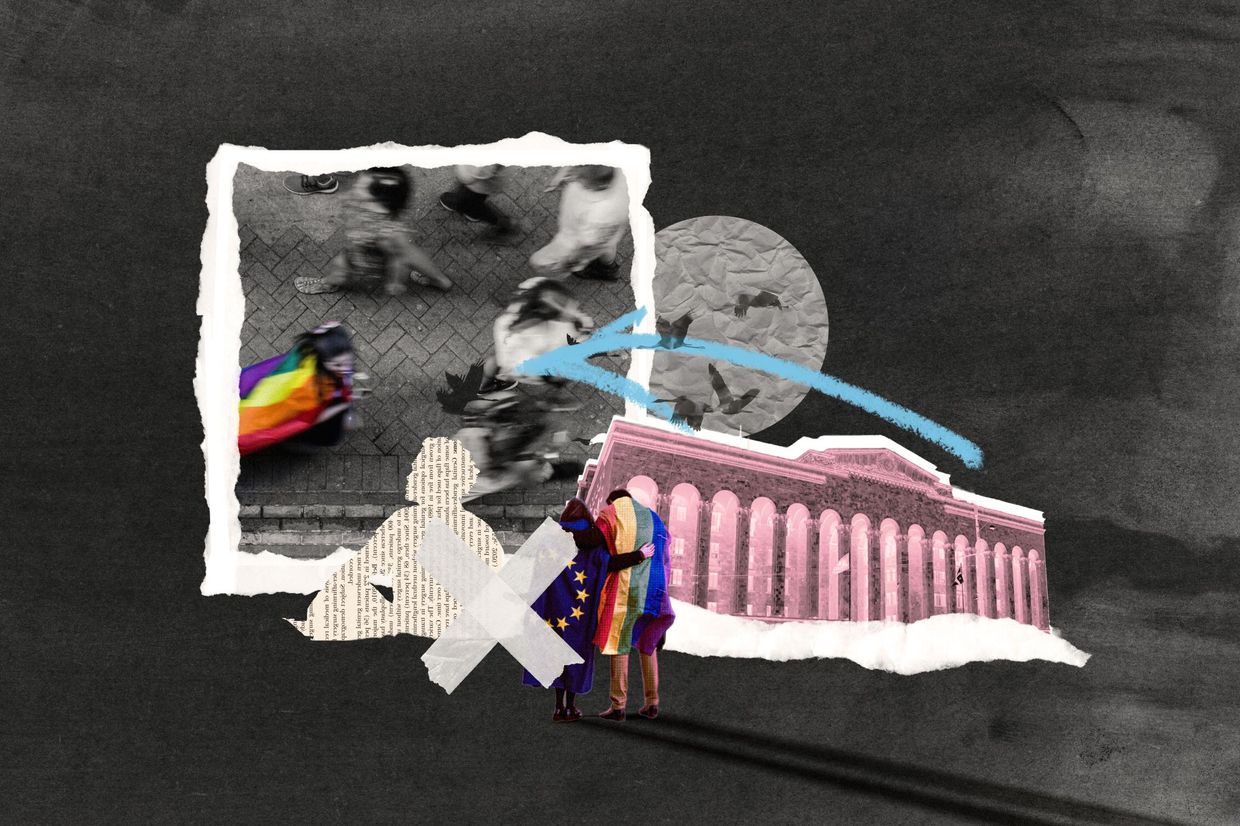
A Community Under Pressure: How State Hostility Is Forcing Georgia’s Queer Activism to the Brink
OC Media reports that growing state hostility against queer people in Georgia is driving a wave of self-censorship, social withdrawal, and emigration. Activists and community members say this pressure is eroding organising capacity and undermining mutual support networks at a critical moment.
By Clémence Desjardins
967 views
OC Media reports that increasing state hostility toward queer people in Georgia is having a corrosive effect on the country's lesbian, gay, bisexual, transgender and queer community, with many respondents describing a turn toward self-censorship, social isolation and emigration. The outlet’s coverage frames these developments as a community in crisis: as pressure mounts, activists and support networks are struggling to sustain public organising and mutual aid.
According to the report, queer activists in Georgia are encountering heightened risks that are prompting immediate and long-term responses. In the short term, many community members are choosing to avoid public visibility and to limit their participation in activism and public debate. Over time, the pressure appears to be encouraging some to leave the country altogether. OC Media characterises these trends as both a symptom and a consequence of an increasingly hostile environment.
The reported shift toward self-protection has implications beyond individual safety. When activists withdraw or remove themselves from public life, the organisations and informal networks that provide legal support, mental-health resources and community solidarity weaken. OC Media’s framing suggests that the erosion of these networks undermines the ability of people to secure basic rights, access services safely and challenge abuses. For vulnerable minorities, such losses can substantially increase isolation and decrease access to help.
The report underscores the broader human-rights and civic-consequences of sustained hostility. When minority communities feel compelled to self-censor, the space for public debate and accountability narrows. Emigration of activists and skilled community organisers deprives civil society of experience and leadership, potentially producing longer-term setbacks in rights advocacy and community resilience.
OC Media’s account highlights the stakes for democratic freedoms in Georgia. The pressures described—self-censorship, isolation, and departure from the country—are not only a crisis for individuals and families but also for the institutions and norms that protect pluralism and dissent. The outlet’s reporting serves as an alert to policymakers, international rights monitors and civil-society organisations that support and monitor minority rights.
While this report provides a snapshot of an unfolding situation, it points to the need for sustained monitoring and for measures that protect the safety and rights of queer people in Georgia. International and local human-rights groups, media outlets and legal advocates are likely to view such reporting as evidence that greater attention, protection and support are required to prevent further erosion of civil liberties and to preserve the capacity of community organising.
Note: This rewrite is based on the OC Media report’s headline and lead reporting that state hostility is pushing queer people into self-censorship, isolation and emigration. For more detailed accounts, direct testimonies and on-the-ground reporting, readers should consult the full OC Media article and related coverage.